
Imagine two nearby hotels offering similar rooms, prices, and even amenities.
One of them receives better website traffic but somehow struggles to generate direct bookings. The other consistently keeps converting their website visitors into paying guests without really relying heavily on online travel agencies (OTAs).
What’s the difference?
In many cases, it’s the website.
Today’s travellers don’t just use hotel websites to check room rates. They use them to evaluate experiences, compare properties, build trust, and decide whether a hotel is worth booking. Before guests see your reception desk, restaurant, or rooms, they see your website.
That’s why hotel website design has evolved far beyond aesthetics. A great hotel website acts like a 24/7 salesperson, storyteller, and booking agent rolled into one.
According to SiteMinder’s Hotel Booking Trends Report, direct website bookings continue to be one of the highest-value booking channels for hotels worldwide. Travellers who book directly often spend more and interact more closely with the hotel than guests arriving through third-party platforms.
If your website isn’t helping visitors picture themselves staying at your property, you’re leaving bookings on the table.
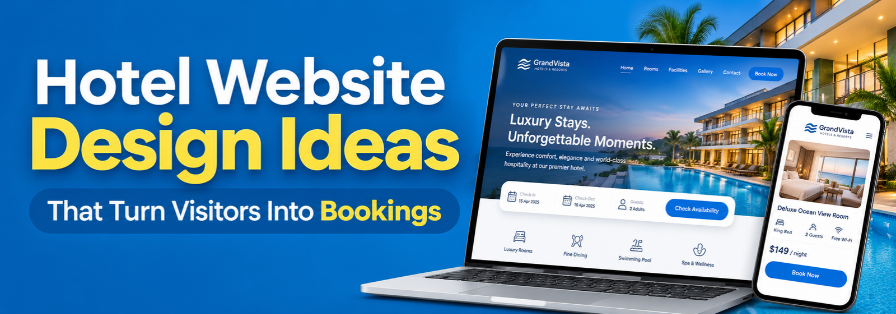
Let’s explore the 181+ trending hotel website styles, design strategies, and creative ideas that help turn curious visitors into confirmed guests!
Table of Contents
Why Great Hotel Website Design Is Secretly Your Best Booking Tool?
A hotel website isn’t just a digital brochure.
It is one of the few places where you completely control the guest experience before arrival.
Unlike OTAs, your website allows you to showcase your property’s personality, highlight unique experiences, communicate value, and encourage direct bookings without paying commission fees.
The best hotel websites remove uncertainty.
They answer questions quickly.
They bring confidence to customers.
And most importantly, they make the entire process of booking feel super simple and easy.
In a world where travellers compare dozens of options before making a decision, thoughtful website design often becomes the difference between “I’ll keep looking” and “Let’s book this.”
Hotel Website Styles That Turn “Just Browsing” Into “I Want To Stay Here”
Every hotel serves different guests.
A luxury resort shouldn’t look like a business hotel. A boutique property shouldn’t feel like a chain hotel.
The most effective hotel websites align their design style with guest expectations.
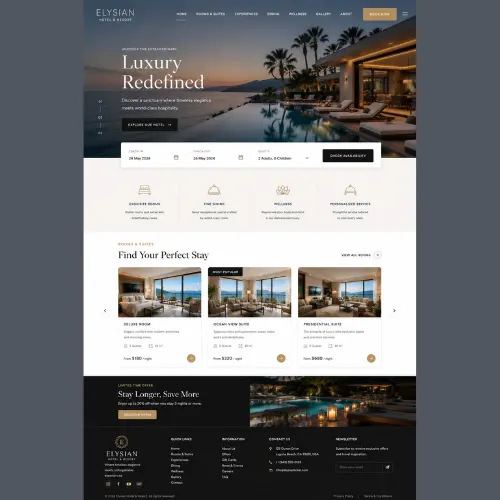
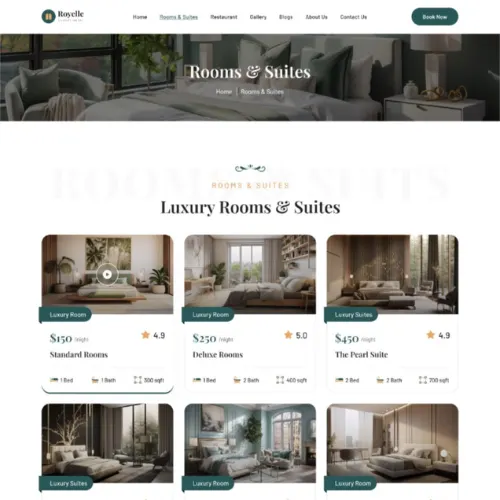
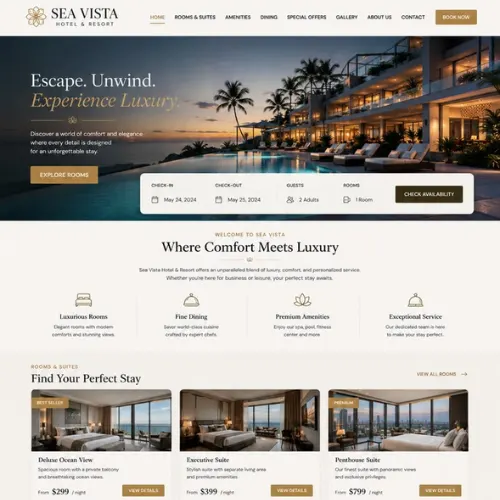
a) Clean, Minimal Hotel Websites That Make Booking Feel Effortless
Sometimes less really is more. This is a universal truth.
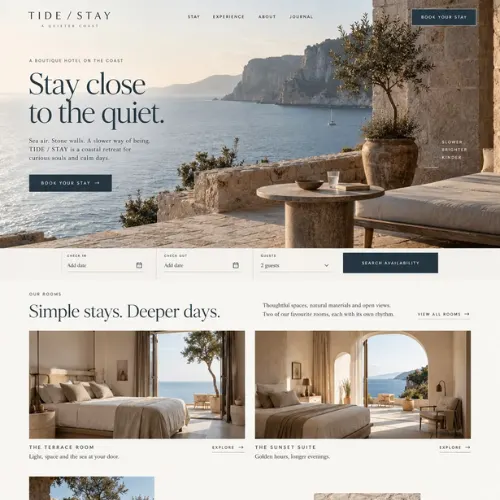
Minimal hotel websites focus primarily on clarity, whitespace, simple navigation, and distraction-free booking journeys for customers.
Instead of just randomly overwhelming visitors with excessive information, they guide users toward the most important actions: exploring rooms, checking availability, and making reservations.
Minimalism works amazingly well for modern hotels, business accommodations, and even upscale urban properties where convenience and sophistication matter.
The best minimalist websites will feel super calm, organised, and easy to trust.
Source: https://in.pinterest.com/
Source: https://in.pinterest.com/
Source: https://in.pinterest.com/
Source: https://in.pinterest.com
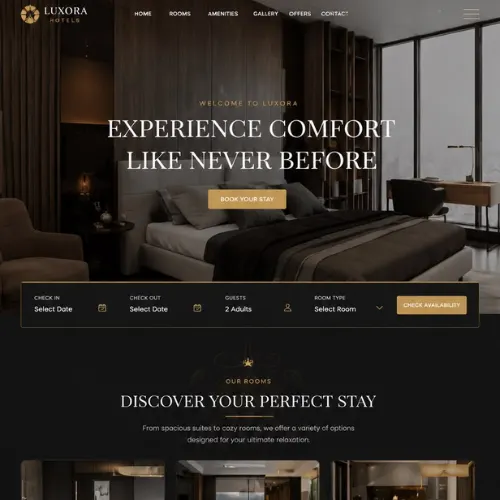
b) Luxury Hotel Websites That Sell The Experience Before Arrival
Luxury guests don’t book rooms.
They book emotions.
They book anticipation.
They book experiences.
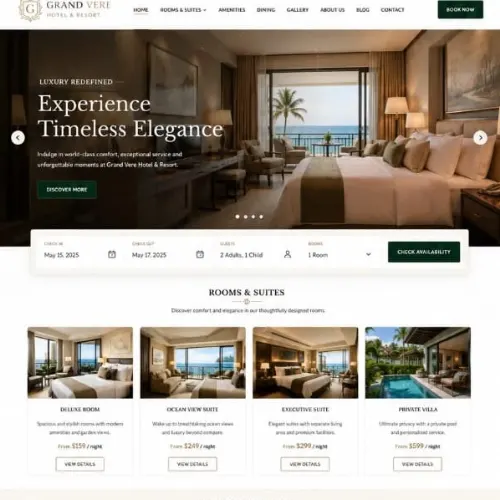
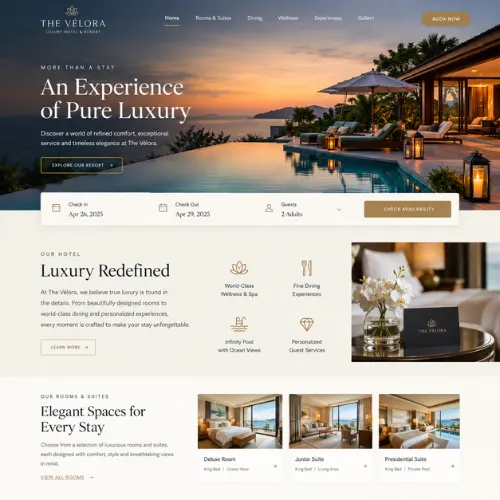
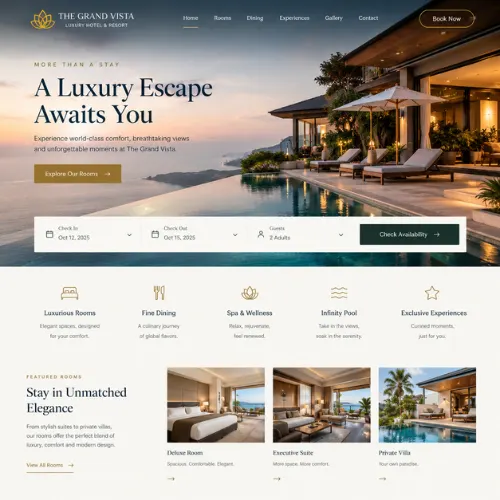
That’s why premium hotel websites spend more on curating stunningly immersive visuals, cinematic videos, elegant typography, and strong, refined storytelling.
Rather than focusing exclusively on amenities, they showcase feelings.
Imagine waking up to ocean views.
Imagine sipping wine at sunset.
Imagine escaping everyday life.
The most successful luxury hotel websites make guests emotionally invested long before they book.
Source: https://in.pinterest.com/
Source: https://in.pinterest.com/
Source: https://in.pinterest.com/
Source: https://in.pinterest.com
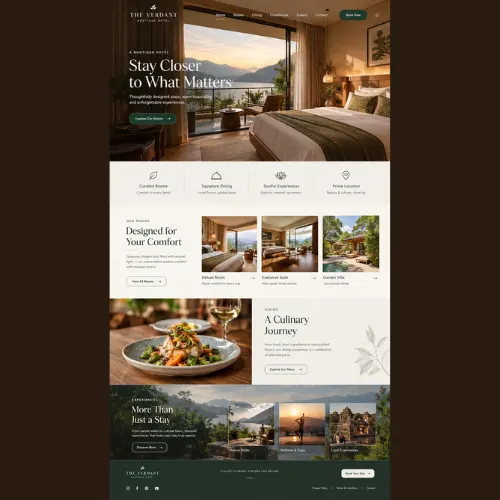
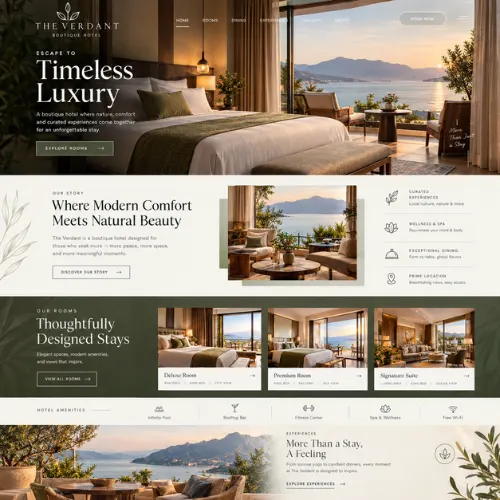
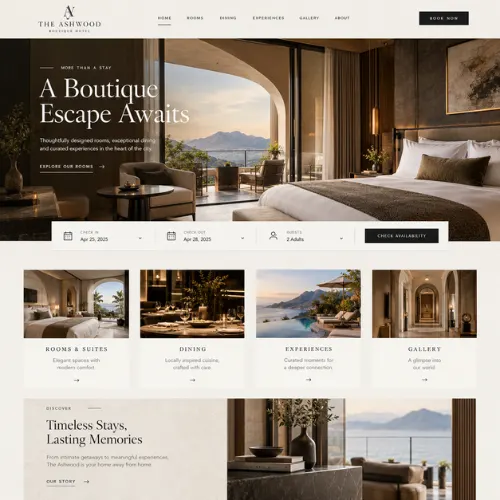
c) Boutique Hotel Websites That Feel Personal, Warm & Memorable
Personality is often the biggest selling point of a boutique hotel.
Guests choosing boutique accommodations are looking for something different from standard hotel experiences.
They want charm.
Character.
Local culture.
Authenticity.
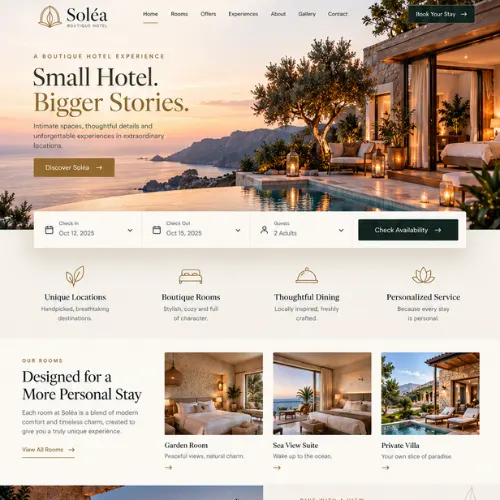
Boutique hotel websites often use custom photography, unique typography, storytelling elements, and personalised content to create stronger emotional connections with visitors.
When done well, these websites feel more like a personal invitation than a sales pitch.
Source: https://in.pinterest.com/
Source: https://in.pinterest.com/
Source: https://in.pinterest.com/
Source: https://in.pinterest.com
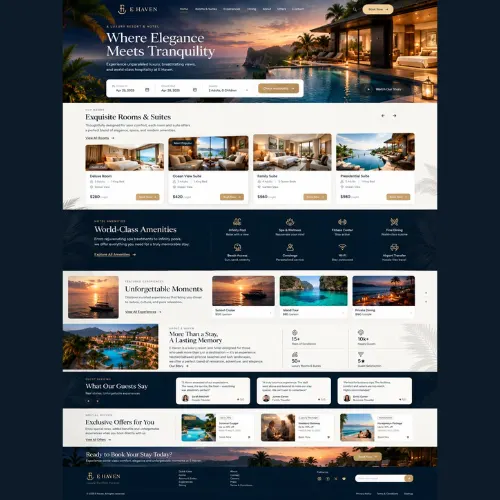
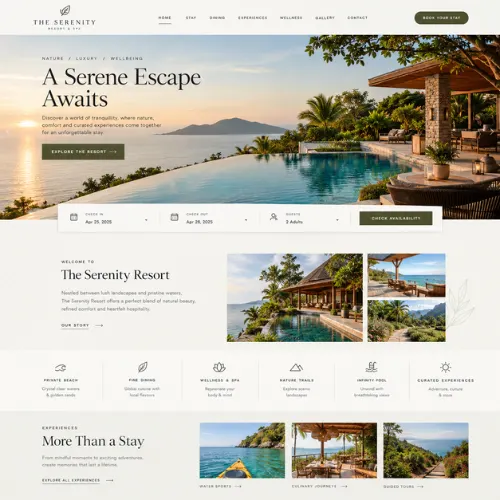
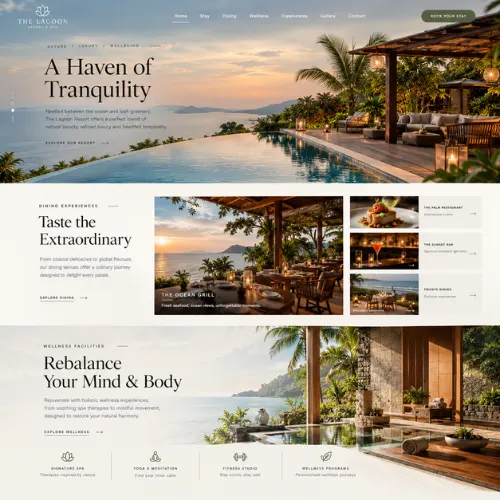
d) Resort Websites That Sell The Entire Holiday
People don’t visit resort websites because they want a room.
They visit because they want a vacation.
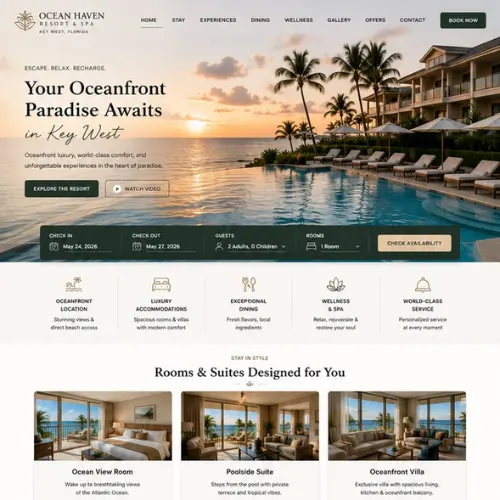
The best resort websites focus on the complete experience rather than individual accommodations.
They showcase beaches, pools, dining experiences, activities, wellness facilities, excursions, and local attractions.
Successful resort websites help visitors visualise their entire trip before booking.
The more vividly guests can imagine their stay, the easier it becomes to convert interest into reservations.
Source: https://in.pinterest.com/
Source: https://in.pinterest.com/
Source: https://in.pinterest.com/
Source: https://in.pinterest.com
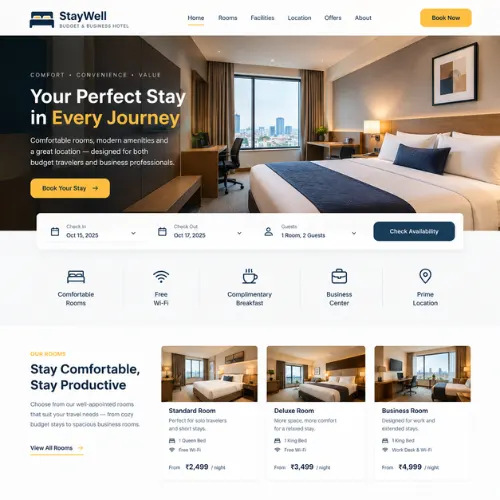
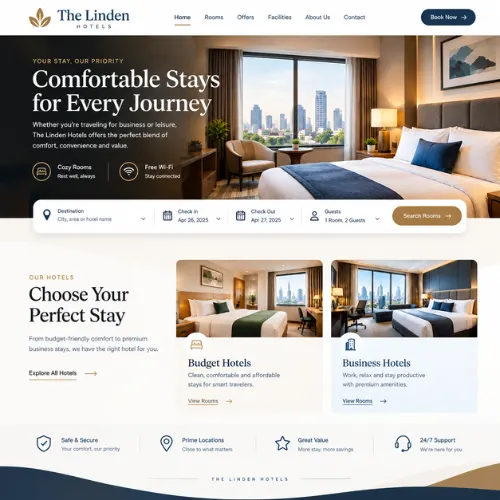
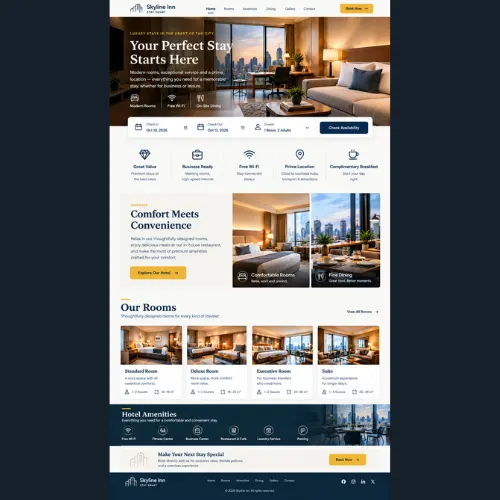
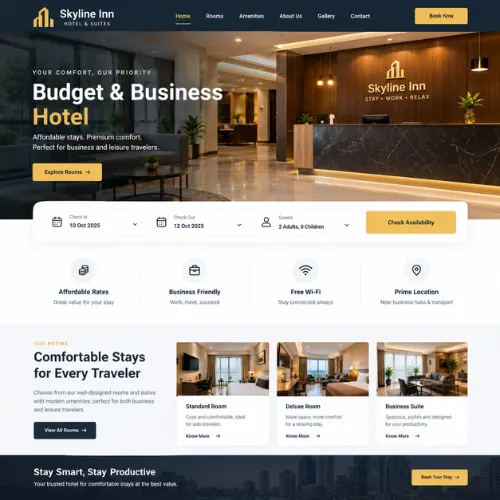
e) Budget & Business Hotel Websites Built For Speed And Convenience
Not every traveller wants super solid inspiration here.
Some simply want quick information.
Business travellers and budget-conscious guests primarily prioritise convenience over storytelling during their stays.
Their ideal website helps them find room details, rates, locations, amenities, and booking options real quick! That’s the real deal-breaker here.
You need to make fast-loading pages, clear navigation, and efficient booking systems your primary focus.
For these audiences, simplicity often outperforms creativity.
Source: https://in.pinterest.com/
Source: https://in.pinterest.com/
Source: https://in.pinterest.com/
Source: https://in.pinterest.com
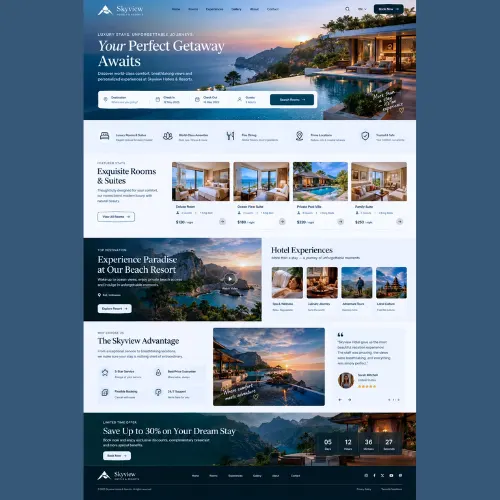
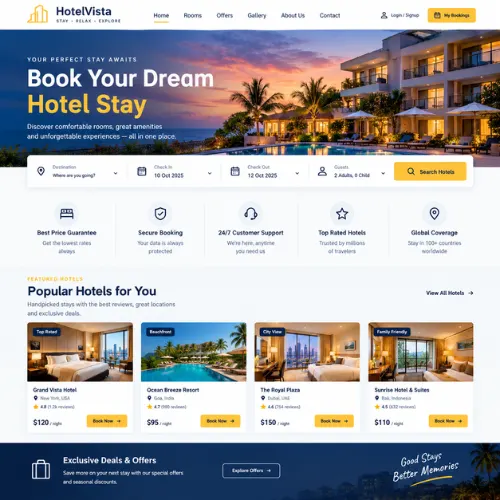
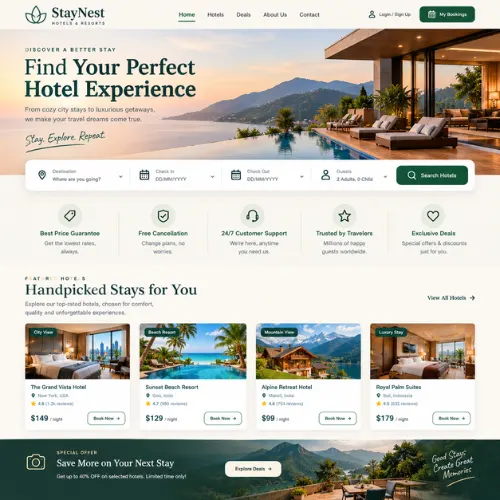
f) Hotel Booking Websites Designed Around Conversion
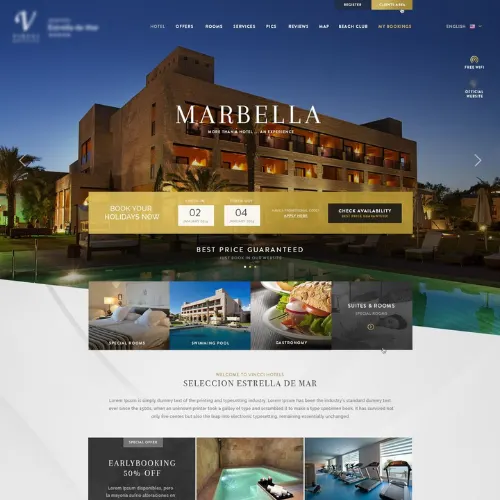
Some hotel websites are intentionally built around one goal: increasing reservations.
Every design choice supports conversion.
Booking buttons remain visible throughout the journey.
Room availability is always easy to check.
Rates are transparent. No possible confusion.
Information is quick and easy to find.
The booking process feels absolutely frictionless.
All of these hotel websites understand a simple truth:
Visitors don’t leave because they aren’t interested.
Many leave because booking feels complicated.
Source: https://in.pinterest.com/
Source: https://in.pinterest.com/
Source: https://in.pinterest.com/
Source: https://in.pinterest.com
How To Design A Hotel Website That Actually Brings You Bookings (Not Just Visitors Who Look Around And Leave)
A beautiful website means very little if it doesn’t convert.
Here are the design principles that consistently improve hotel booking performance.
1. Start With Absolute Clarity
Visitors should immediately understand:
1. What type of hotel you operate
2. Where you’re located
3. Who your property is ideal for
4. Why guests choose you
A confused visitor rarely becomes a customer.
2. The Five-Second Booking Test
Within five seconds of landing on your homepage, guests should know:
1. Where the hotel is
2. What makes it unique
3. What experience it offers
4. How to check availability
If they can’t answer these questions quickly, your website may be losing bookings.
3. Design A Layout That Feels Effortless To Navigate
Navigation should always feel intuitive and interesting.
Your potential guests shouldn’t have to search for:
1. Room information
2. Pricing
3. Amenities
4. Contact details
5. Booking options
And scroll through dozens of webpages while being confused.
The easier the journey, the higher the conversion potential.
4. Use High-Quality Visuals That Sell The Experience
Travel is emotional.
Guests want to see what they are buying.
Professional photography remains one of the most important conversion tools available to hotels.
Show:
1. Rooms
2. Bathrooms
3. Dining areas
4. Views
5. Amenities
6. Experiences
7. Common spaces
Many hotel websites only display those perfectly staged but empty rooms. That can get extremely boring and monotonous.
Guests want to imagine experiences, not furniture.
Include visuals showing:
1. Couples having breakfast
2. Families enjoying the pool
3. Guests watching sunsets
4. Friends dining together
People book experiences they can picture themselves enjoying. This is a very strong hospitality branding marketing insight.
5. Think Mobile First
Most hotel dreams begin on a smartphone.
Travellers often discover destinations, browse accommodations, and compare properties while scrolling through their phones.
A slow or poorly optimised mobile experience can quickly drive visitors away.
Your website should look and function flawlessly across all screen sizes.
Also add some thumb-friendly design elements to your website.
Most people browse hotel websites using one hand.
Important actions like:
1. Check Availability
2. View Rooms
3. Book Now
should be easily reachable with a thumb!
6. Make Room Search And Booking Feel Effortless
Booking should never feel like work.
Reduce unnecessary steps.
Keep forms simple.
Display room options clearly.
Show rates transparently and upfront. Ensure no hidden costs.
Allow your guests to complete their reservations without any potential frustration.
Every additional obstacle increases abandonment risk here.
7. Use CTAs That Feel Natural
Strong calls-to-action are the ideal way to guide visitors without really feeling pushy.
Try to make these CTAs more creative:
1. Check Availability
2. View Rooms
3. Book Your Stay
4. Explore Suites
5. Plan Your Escape
Strong CTAs are way better than the usual sales tactics.
8. Make It Super Easy For Guests To Reach You
Questions often stand between interest and booking.
Display:
1. Phone numbers
2. Email addresses
3. WhatsApp options
4. Live chat
5. Contact forms
Accessibility is the best way to build confidence.
9. Add Smart Tools That Help Guests Decide Faster
Modern travellers appreciate convenience.
Helpful tools include:
1. Interactive maps
2. Cost calculators
3. FAQ sections
4. Local attraction guides
5. Seasonal recommendations
The more questions your website answers, the easier booking becomes for customers. They will have no doubts prior to making the reservations.
10. Bring The Hotel Experience Online With Virtual Tours
Guests want fewer surprises.
Virtual tours help visitors understand exactly what they are actually booking.
Include some interactive features such as room walkthroughs, 360-degree tours, and even interactive experiences that reduce uncertainty and improve confidence.
When guests know what to expect, they are way more comfortable making reservations at your property.
11. Highlight Benefits Clearly
Don’t just list features.
Explain benefits.
Instead of:
“Infinity Pool”
Say:
“Infinity Pool Overlooking The Arabian Sea”
Instead of:
“Complimentary Breakfast”
Say:
“Start Your Morning With A Freshly Prepared Breakfast Included With Every Stay”
Benefits always help guests visualise value.
12. Keep Your Website Fast, Smooth & Frustration-Free
Speed matters here more than anything.
Research consistently shows that slow-loading websites increase bounce rates and reduce conversions.
Travellers expect instant access to information about your property. Don’t keep them waiting because of your slow-loading webpages.
A delay of even a few seconds can cost potential bookings.
13. Build Trust With Real Proof
Every hotel claims to offer great service. That’s common everywhere!
Guests expect those claims.
What influences decisions more is proof.
Include:
1. Guest reviews
2. Testimonials
3. Awards
4. Ratings
5. User-generated photos
6. Press mentions
Consider featuring:
1. Instagram images and videos
2. Guest photo galleries
3. Tagged social content
And more….
This makes the entire experience more trustworthy and engaging as your potential guests get a glimpse of what they are about to experience!
Authenticity builds gradual and long-term credibility.
14. Direct Bookings Happen When Confidence Is High
Most visitors don’t leave because they are uninterested.
They leave because they are mostly uncertain.
Strong hotel websites reduce uncertainty by answering common questions before guests ask them.
The more confident a visitor feels, the more likely they are to book directly.
Listed Below Are 181+ Hotel Website Design Ideas You Should Totally Check Out
Luxury & Premium Hotel Website Ideas
Boutique Hotel Website Ideas
Resort Website Ideas
Business Hotel Website Ideas
Budget Hotel Website Ideas
Wrapping It Up
Your hotel website is no longer just a place where guests check room rates.
It is often the first impression, the first interaction, and sometimes even the ultimate deciding factor between a direct booking and a possibly lost opportunity. Now this jeopardises your revenue generation.
The most successful hotel websites don’t simply showcase rooms randomly. They sell experiences, reduce uncertainty, build trust, and make booking feel effortless. Whether you are running a luxury resort, boutique stay, business hotel, or family-friendly destination, thoughtful website design can directly influence occupancy and revenue.
At DesignerPeople, we create hotel websites that blend stunning design, strategic storytelling, and conversion-focused user experiences. From luxury resorts to boutique hospitality brands, we help hotels build websites that don’t just attract visitors but also turn them into guests.
Because great hotel websites don’t just get seen.
They get booked right away!

As a passionate entrepreneur and creative brand consultant with experience of 18 years in digital, branding and packaging industry, it is my honest effort to put my experiences and knowledge of industry towards readers. A chartered accountant by degree but a marketing personality in blood has motivated her to take in designing industry as a career. With her fun-loving personality and sharp branding skills, she is a great motivational speaker on her YouTube channel, an active member in various business channels offline as well as online. Do connect me personally via my LinkedIn and I love to share my expertise with you.