
Most businesses don’t wake up one morning and decide they need a rebrand.
It usually happens gradually.
The logo that looked great when you launched now feels dated. The messaging no longer reflects what you actually do. New competitors enter the market with sharper positioning. Customers understand your products but struggle to remember your brand.
Meanwhile, the business itself keeps evolving.
You add new services. Enter new markets. Target different customers. Increase prices. Expand your team.
But your brand stays frozen in time.
That’s where the problem begins.
A brand isn’t just a logo or a colour palette. It is the story customers tell themselves about your business. When that story no longer matches reality, growth becomes harder than it should be.
Apparently, business rebranding increases revenue by 10% to 33% when brand consistency is maintained and improved. That highlights an important truth: branding isn’t just about looking good. It directly influences recognition, trust, and business performance.
So how do you know when it’s time for a rebrand? Let’s find out.
Table of Contents
What Does Rebranding Actually Mean?
Many people think rebranding means changing a logo.
It doesn’t.
A logo redesign may be part of a rebrand, but true rebranding goes much deeper.
Rebranding is the strategic process of changing how customers, employees, investors, and the market perceive your business.
That can involve:
- Brand positioning
- Visual identity
- Messaging
- Website design
- Packaging design
- Brand voice
- Customer experience
- Marketing communications
In simple terms, rebranding happens when a company realises that its current identity no longer reflects who it is, who it serves, or where it’s heading.
The purpose isn’t to look different.
The purpose is to become more relevant.
A successful rebrand closes the gap between how a business sees itself and how customers actually see it.
10 Signs Your Business Might Be Ready for a Rebrand
Not every business needs a rebrand.
But when several of these signs start showing up together, it’s worth paying attention.
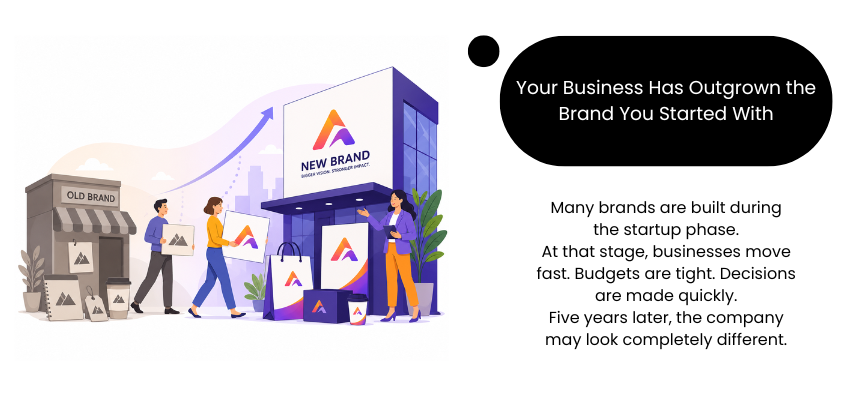
1. Your Business Has Outgrown the Brand You Started With
Many brands are built during the startup phase.
At that stage, businesses move fast. Budgets are tight. Decisions are made quickly.
Five years later, the company may look completely different.
What started as a small local service provider may now operate nationally. A niche business may have expanded into multiple categories.
Yet the branding still reflects the company’s early version.
If your business has evolved significantly but your brand hasn’t, customers may be seeing an outdated version of you.
Your brand should grow alongside your business.
Not stay stuck in its first chapter.
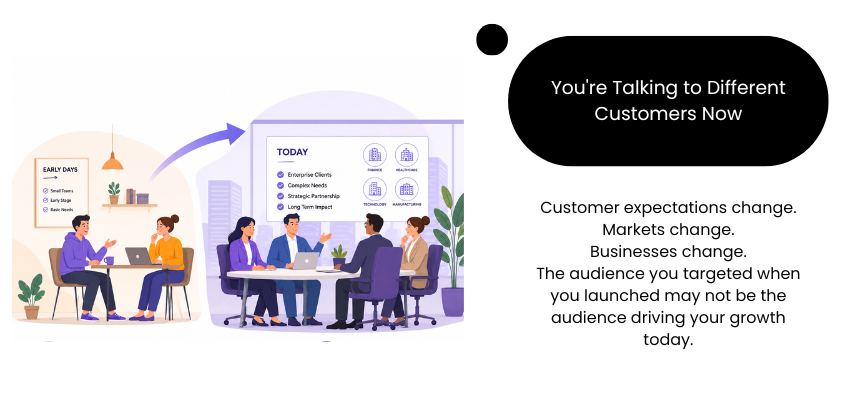
2. You’re Talking to Different Customers Now
Customer expectations change.
Markets change.
Businesses change.
The audience you targeted when you launched may not be the audience driving your growth today.
You originally served startups but now work with enterprise clients.
You may have started as a budget-friendly brand but have moved into a premium segment.
When your audience changes, your branding needs to evolve too.
Because the language, visuals, and messaging that attracted one group may completely miss the mark with another.
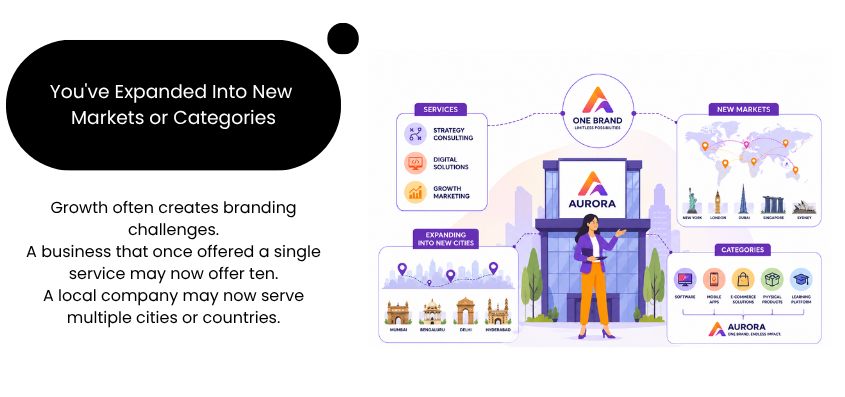
3. You’ve Expanded Into New Markets or Categories
Growth often creates branding challenges.
A business that once offered a single service may now offer ten.
A local company may now serve multiple cities or countries.
A niche product brand may have expanded into entirely new categories.
The question becomes:
Does your current brand still represent the full scope of what you do?
If not, customers may struggle to understand your value.
A strong brand should create expansion opportunities. Not limit them.
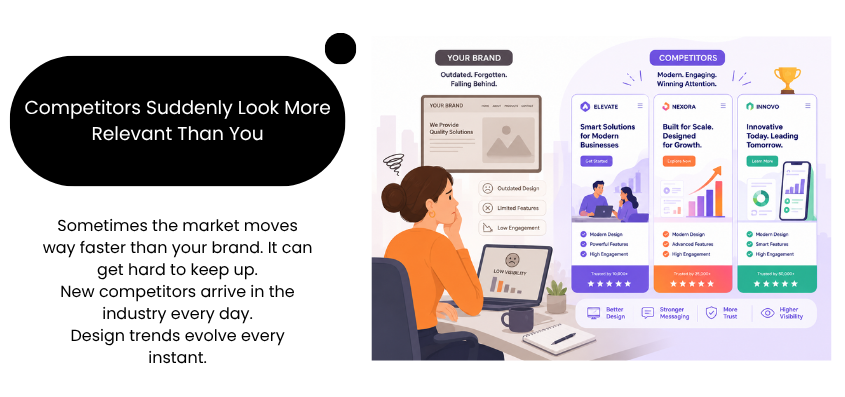
4. Competitors Suddenly Look More Relevant Than You
Sometimes the market moves way faster than your brand. It can get hard to keep up.
New competitors arrive in the industry every day.
Design trends evolve every instant.
Customer expectations shift rapidly.
And before you even realise it, brands that launched years after yours appear more modern, more professional, and more aligned with what customers want.
The danger isn’t just visual.
It’s psychological.
Customers often associate a modern brand with a modern business.
A Useful Insight
Customers rarely compare businesses feature by feature.
They compare impressions.
And impressions happen fast.
If your competitors look far more current and relevant, they may be winning trust before the conversation even begins.
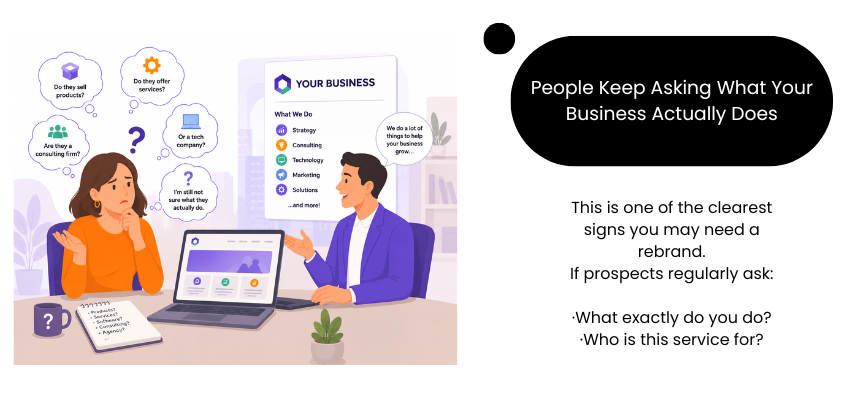
5. People Keep Asking What Your Business Actually Does
This is one of the clearest signs you may need a rebrand.
If prospects regularly ask:
- What exactly do you do?
- Who is this service for?
- How are you different?
- Why should I choose you?
Then your brand may not be communicating clearly.
A strong brand should answer these questions almost instantly.
Customers shouldn’t have to work to understand your value.
An Important Reality
Confused customers rarely buy.
They delay decisions.
Research competitors.
Or leave entirely.
Clarity is one of the most underrated business advantages a brand can create.
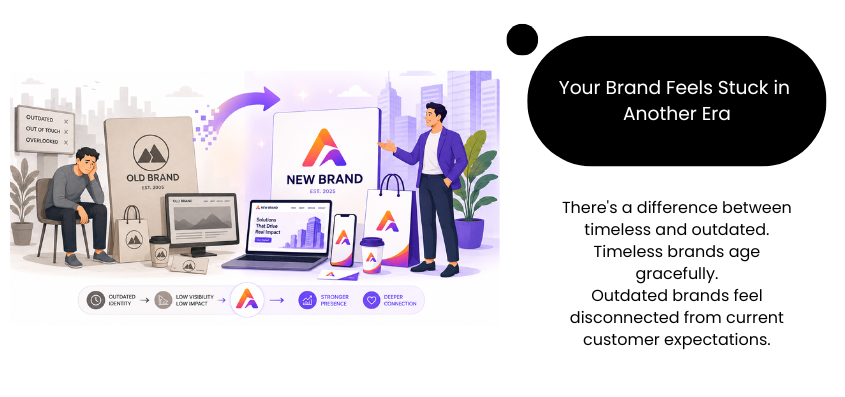
6. Your Brand Feels Stuck in Another Era
There’s a difference between timeless and outdated.
Timeless brands age gracefully.
Outdated brands feel disconnected from current customer expectations.
Maybe your logo hasn’t changed in fifteen years.
Maybe your website feels old.
Your visual identity may no longer reflect the quality of your products or services.
Customers often make assumptions about the business based on what they see.
Fair or not, appearance influences perception.
7. Your Brand Looks Different Everywhere
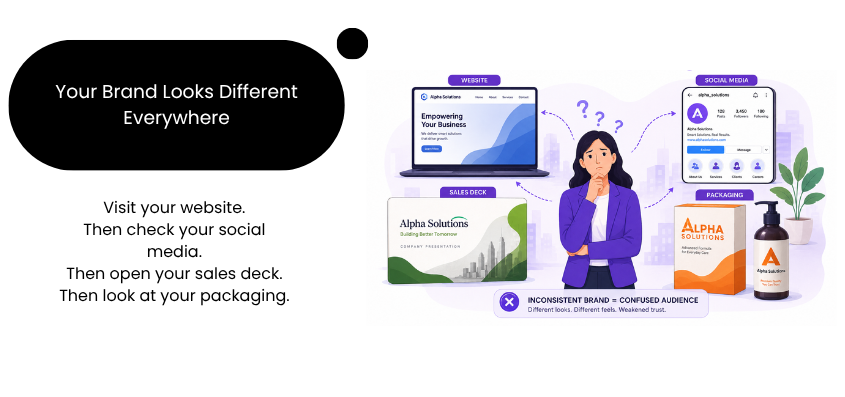
Visit your website.
Then check your social media.
Then open your sales deck.
Then look at your packaging.
Do they all feel like they belong to the same company?
If not, you’ve got a consistency problem.
Brand inconsistency creates confusion.
And confused brands are harder to remember.
People trust familiarity.
When every interaction feels different, customers never develop that sense of familiarity.
8. Your Business Strategy Has Changed Completely
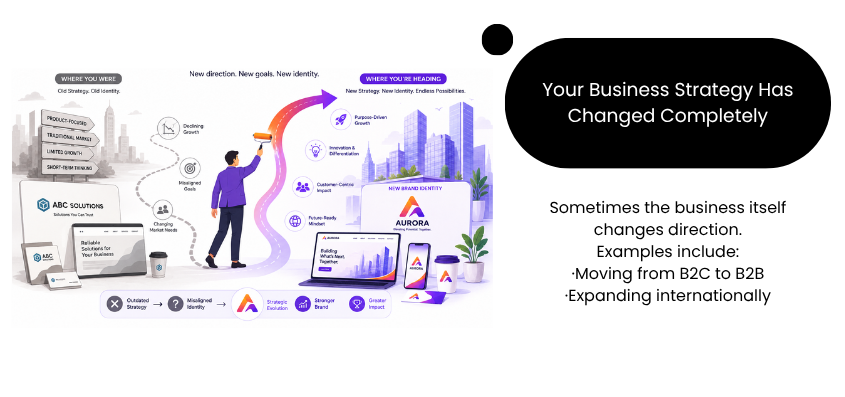
Sometimes the business itself changes direction.
Examples include:
- Moving from B2C to B2B
- Expanding internationally
- Entering premium markets
- Launching new business models
- Acquiring another company
When strategy changes dramatically, branding often needs to follow.
Otherwise, customers continue associating the business with its past rather than its future.
9. Your Brand Is Making It Harder to Charge Premium Prices
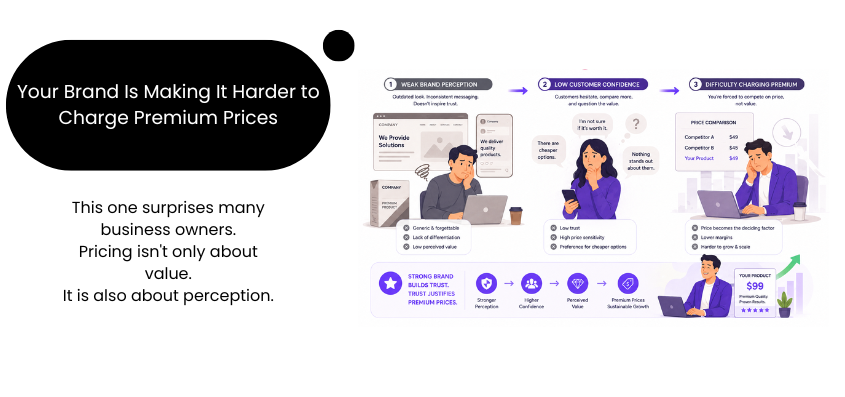
This one surprises many business owners.
Pricing isn’t only about value.
It is also about perception.
Customers often decide what something is worth before they evaluate the details.
A weak brand creates doubt.
A strong brand creates confidence.
Pricing power is a company’s ability to charge higher prices because customers perceive greater value, trust, expertise, or differentiation.
If your products or services deserve premium pricing but customers consistently push back, the issue may not be the offer.
It may be the brand surrounding the offer!
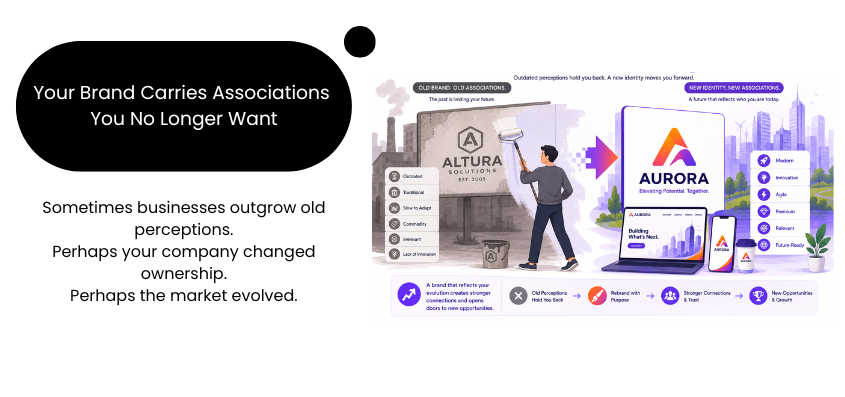
10. Your Brand Carries Associations You No Longer Want
Sometimes businesses outgrow old perceptions.
Perhaps your company changed ownership.
Perhaps the market evolved.
Perhaps your old positioning no longer reflects your values.
A rebrand allows businesses to reset expectations and introduce a more relevant narrative.
In some cases, it’s less about changing the future and more about leaving the past behind.
How to Rebrand Without Creating Chaos?
A successful rebrand isn’t built around personal opinions.
It is built around research and strategy.
Here’s a practical roadmap.
Step 1: Understand Why You Are Rebranding
Start with the problem.
What exactly are you trying to fix with your brand?
- Low awareness?
- Weak differentiation?
- Outdated perception?
- Audience shift?
Without a clear reason, rebranding becomes simple guesswork.
Step 2: Learn What Customers Actually Think
This is where many companies make massive mistakes.
They focus on what they think customers believe.
Instead, gather real insights from different sources, such as:
- Surveys
- Interviews
- Reviews
- Competitor analysis
- Customer feedback
The strongest rebrands are always evidence-based and concrete.
Step 3: Revisit Your Positioning
Before touching your brand visuals, answer three questions:
- Who do we serve?
- What makes us different?
- Why should customers choose us?
These will help you get a fresh perspective for your brand. Everything else flows from these answers.
Step 4: Build a Brand Identity That Supports Growth
Now comes the visible part:
- Logo
- Colors
- Typography
- Messaging
- Website
- Visual systems
Every element should communicate the same story consistently.
Step 5: Create a Rollout Plan
Rebranding isn’t a simple single launch day.
It’s a transition.
Create a plan for updating:
- Website
- Social media
- Packaging
- Marketing materials
- Internal documents
- Sales collateral
Consistency matters starting from day one.
Step 6: Explain the Change
People connect with stories. Authentic.
Tell customers everything.
- Why the rebrand happened
- What has changed
- What remains the same
Transparency is the #1 factor in building long-term trust here.
Step 7: Measure Results
Track:
- Website traffic
- Brand awareness
- Lead quality
- Customer sentiment
- Conversion rates
When you track results consistently, you can optimise and improve wherever possible.
How Much Does It Cost to Rebrand a Business?
The honest answer?
It largely depends on the depth of the change.
A small visual refresh may involve updating logos, colours, and messaging.
A full rebrand may include so many aspects as:
- Brand strategy
- Positioning workshops
- Visual identity design
- Website redesign
- Packaging redesign
- Marketing rollout
And more…
Ask this to yourself instead:
What exactly is your current brand costing you?
If your customers are confused, competitors appear stronger, pricing power is weak, or growth has slowed because perception hasn’t kept pace with reality, the cost of not rebranding may actually be way higher than the investment itself!
Final Thoughts
Businesses evolve. Markets evolve. Customers evolve. Hence, brands need to evolve too.
A company should consider rebranding when its current identity no longer accurately reflects its audience, positioning, services, ambitions, or customer expectations.
When your brand clearly communicates who you are, what you do, and why customers should trust you, growth becomes so much easier. Your marketing becomes way more effective, and your business becomes easier to remember!
At DesignerPeople, we help businesses create strategic brand identities that go far beyond logos. Whether you are planning a brand refresh or a complete transformation, our team can surely help you build a brand that supports where your business is going next. Not where it started!

As a passionate entrepreneur and creative brand consultant with experience of 18 years in digital, branding and packaging industry, it is my honest effort to put my experiences and knowledge of industry towards readers. A chartered accountant by degree but a marketing personality in blood has motivated her to take in designing industry as a career. With her fun-loving personality and sharp branding skills, she is a great motivational speaker on her YouTube channel, an active member in various business channels offline as well as online. Do connect me personally via my LinkedIn and I love to share my expertise with you.