
If you have ever launched a product, redesigned a label, or started a new business, you have probably come across this question:
“Do I need branding, packaging design, or both?”
At first glance, they seem like the same thing. Both involve logos, colours, typography, visuals, and design decisions. But in reality, both serve two completely different purposes for your brand.
Think about the last product you bought from a supermarket shelf or an online marketplace. The packaging may have convinced you to click, pick up, or purchase the product. But the brand is what made you remember it, trust it, and come back for a second purchase.
That’s why successful companies don’t treat branding and packaging as separate activities. They work together to create a consistent experience from the first impression to long-term loyalty.
In today’s crowded marketplace, where customers are exposed to thousands of marketing messages daily, businesses need both strong branding and effective packaging design to stand out, build trust, and drive growth.
In fact, a recent research found that 72% of consumers claim that packaging design massively influences their purchase decisions. This highlights just how important your brand’s visual presentation has become in modern buying behaviour!
Let’s learn more about branding vs packaging design.
Table of Contents
What are the Key Differences Between Branding and Packaging Design?
Many people use the terms interchangeably, but branding and packaging design solve different business challenges.
Branding is about creating a lasting perception in the customer’s mind. Packaging design is about helping a product get noticed, understood, and chosen.
One works before, during, and after the purchase journey. The other works hardest at the moment of purchase.
Let’s break it down.
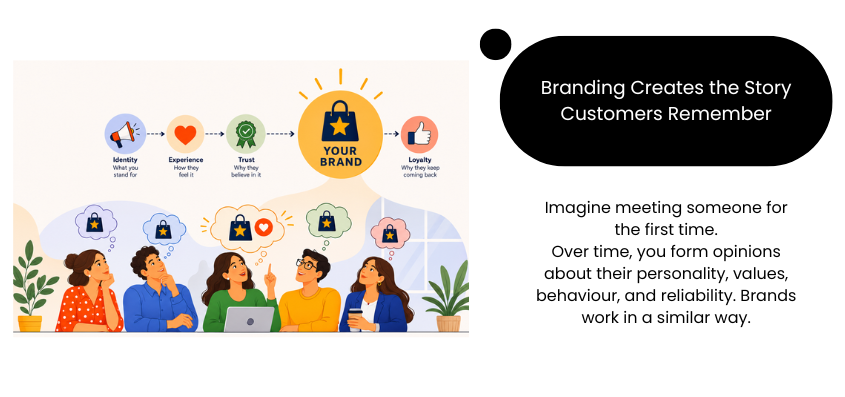
1. Branding Creates the Story Customers Remember
Imagine meeting someone for the first time.
Over time, you form opinions about their personality, values, behaviour, and reliability. Brands work in a similar way.
Branding is the overall brand identity of a business. It shapes how people perceive your company and what they associate with it emotionally.
It includes:
1. Your positioning
3. Tone of voice
4. Visual identity
5. Messaging
6. Customer experience
7. Reputation
When people think of brands like Apple, Nike, or Amul, they don’t immediately think about a single product. They think about innovation, performance, trust, or familiarity.
A strong brand helps customers feel confident about choosing your business before they even compare products.
Quick Insight
A customer may discover your product through packaging, but they stay loyal because of the brand behind it.
2. Packaging Design Is Where the Product Speaks for Itself
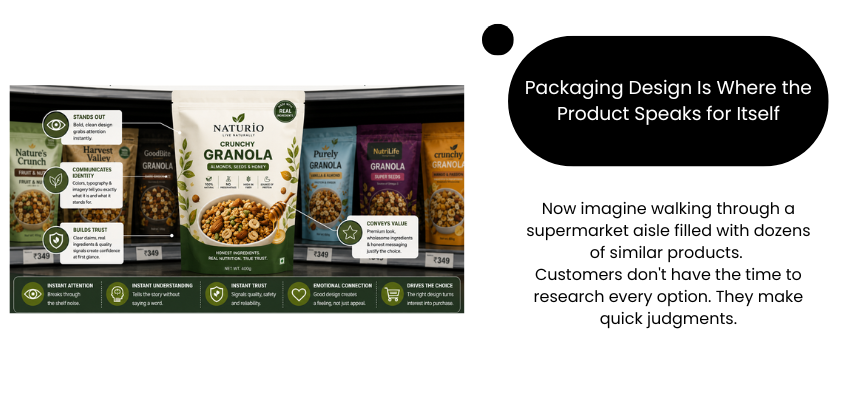
Now imagine walking through a supermarket aisle filled with dozens of similar products.
Customers don’t have the time to research every option. They make quick judgments.
This is where packaging becomes incredibly important.
Apparently, 64% of shoppers try a new product just because the graphic design grabs their attention on the shelf.
Packaging design is the visual and physical presentation of a product. It includes the label, container, box structure, typography, imagery, colour palette, product information, and every element customers see before purchasing.
Good packaging answers questions immediately:
1. What exactly is this product?
2. Who is it for?
3. Why should I trust this brand?
4. Why is it better than the other alternatives present at the store?
In many categories, packaging gets only a few seconds to make an impression.
If branding builds the relationship, packaging starts the conversation.
3. Branding Shows Up Everywhere Customers Interact With You
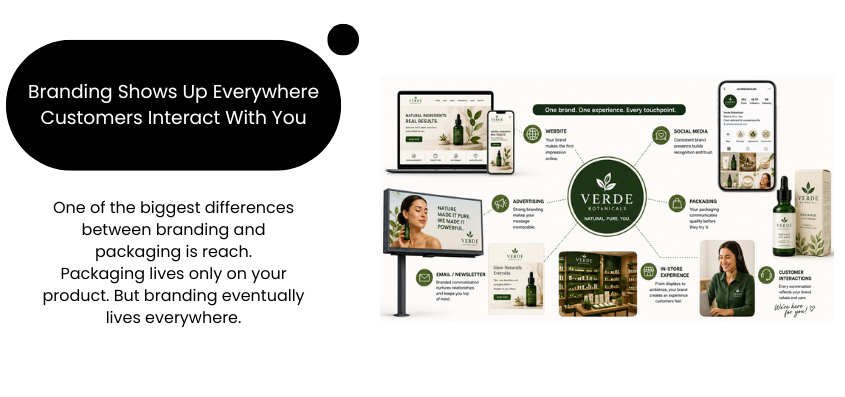
One of the biggest differences between branding and packaging is reach.
Packaging lives only on your product. But branding eventually lives everywhere.
Your branding influences so many aspects such as:
1. Website design
2. Social media presence
3. Advertisements
4. Sales presentations
5. Customer service interactions
6. Store experience
7. Product packaging
8. Email communication
Every interaction shapes how people feel and perceive your business in the long run.
For example, a law firm’s brand isn’t just its logo. It’s also how the lawyers communicate, how professional the website feels, and how confidently clients trust the firm during serious legal situations.
That’s why branding is often described as the complete customer experience.
4. Packaging Has One Critical Mission: Win Attention Fast
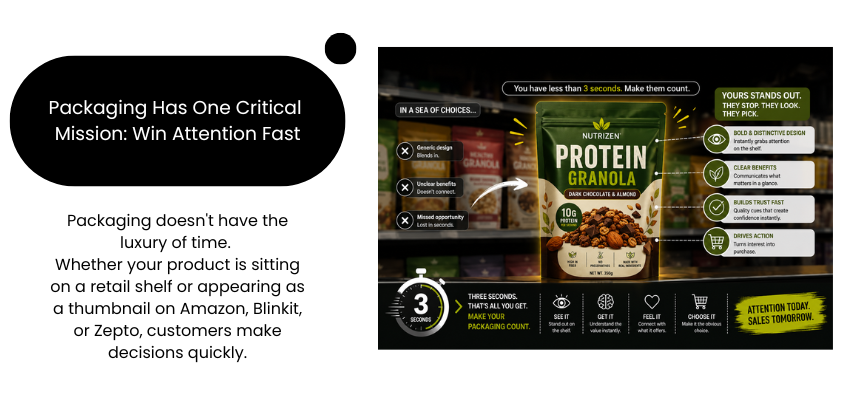
Packaging doesn’t have the luxury of time.
Whether your product is sitting on a retail shelf or appearing as a thumbnail on Amazon, Blinkit, or Zepto, customers make decisions quickly.
The packaging must communicate value instantly.
The best packaging designs usually achieve three things:
1. They grab attention.
2. They communicate benefits.
3. They create trust.
If customers can’t understand your product within a few seconds, there’s a good chance they’ll move on to something else.
A Simple Rule
Branding creates familiarity. Packaging creates visibility.
You need both.
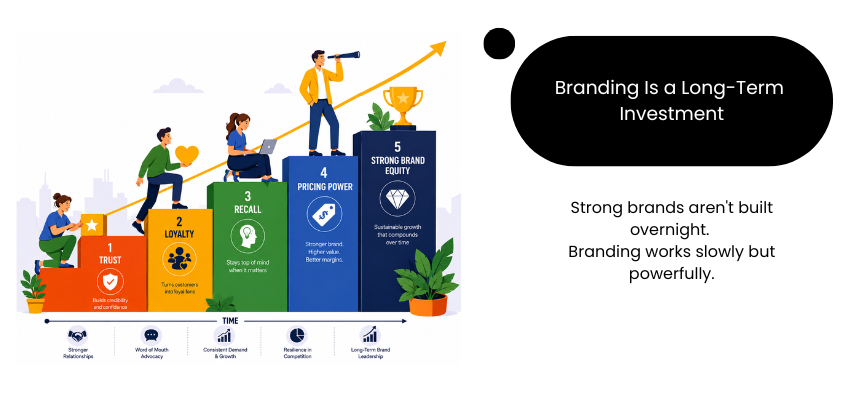
5. Branding Is a Long-Term Investment
Strong brands aren’t built overnight.
Branding works slowly but powerfully.
Every advertisement, customer interaction, product experience, and recommendation contributes to how customers perceive your business.
That’s why companies invest heavily in maintaining consistent branding over years, sometimes decades.
The reward?
1. Better customer trust
2. Stronger loyalty
3. Higher brand recall
4. Greater pricing power
People are often willing to pay more for brands they trust because they feel confident about the experience they’ll receive.
6. Packaging Delivers Results at the Point of Purchase
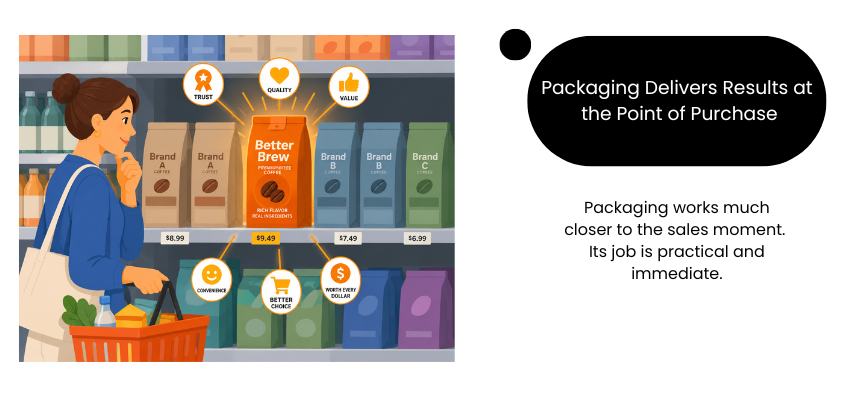
Packaging works much closer to the sales moment.
Its job is practical and immediate.
A customer standing in front of ten competing products needs reasons to choose yours.
The packaging must communicate:
1. Product category
2. Key benefits
3. Quality level
4. Differentiation
5. Brand credibility
This is especially important for new brands that don’t yet have strong awareness.
Before customers trust your brand, they often trust your packaging.
7. One Brand Can Have Hundreds of Packaging Designs
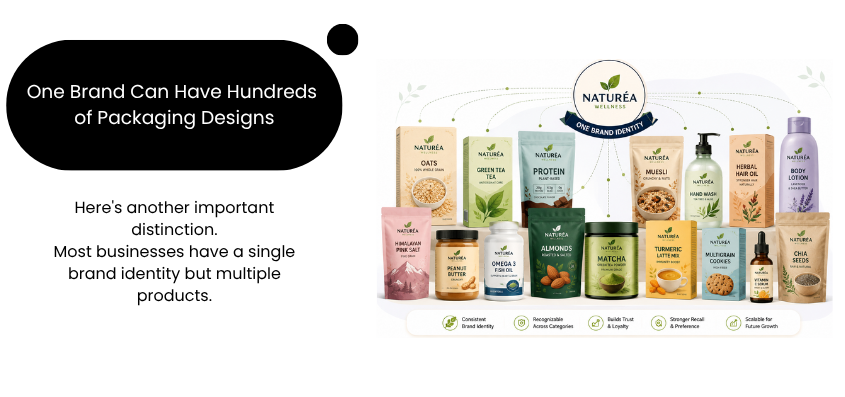
Here’s another important distinction.
Most businesses have a single brand identity but multiple products.
A skincare company may sell:
1. Face wash
2. Sunscreen
3. Serum
4. Moisturizer
5. Night cream
Each product requires different packaging.
Yet customers should immediately recognise that all those products belong to the same company.
That’s where branding creates consistency.
The packaging may vary, but the brand remains recognisable.
Think of branding as the parent system and packaging as individual expressions of that system.
What Happens When Branding and Packaging Don’t Work Together?
Many businesses develop branding and packaging separately. Unfortunately, customers notice the disconnect immediately. Now, this is one of the major reasons why most startups fail.
a) Customers Get Mixed Signals
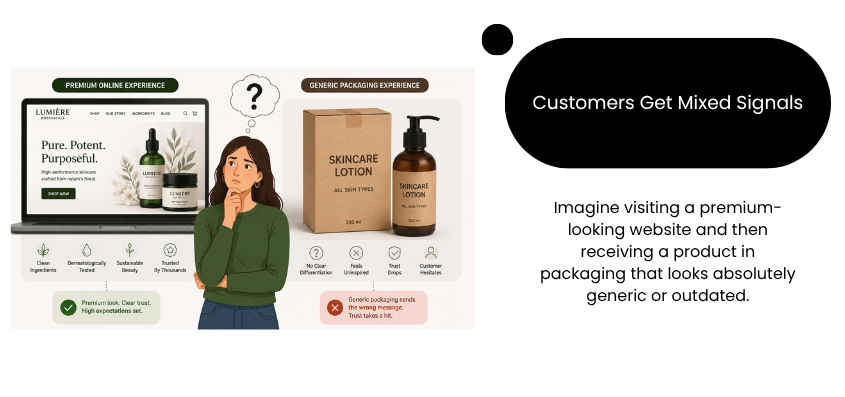
Imagine visiting a premium-looking website and then receiving a product in packaging that looks absolutely generic or outdated.
Something just feels off.
Customers naturally question the quality and credibility of the business.
71% of companies identify market confusion as the biggest consequence of inconsistent brand presentation.
Consistency builds trust. Inconsistency creates doubt.
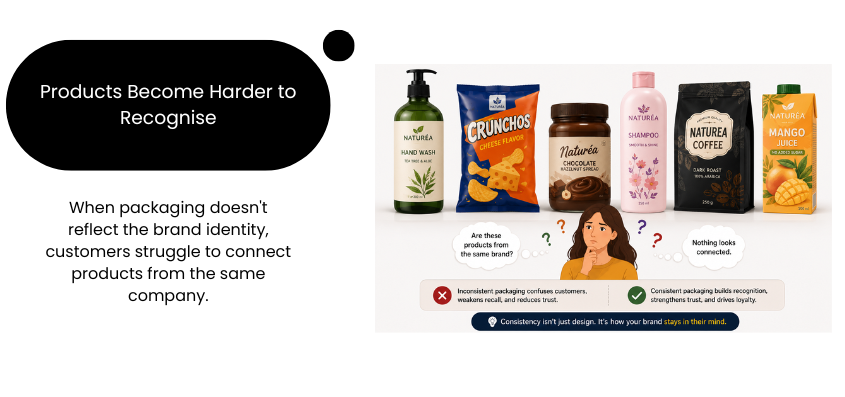
b) Products Become Harder to Recognise
When packaging doesn’t reflect the brand identity, customers struggle to connect products from the same company.
Every new product feels unrelated.
Instead of building recognition, the brand starts over with every launch.
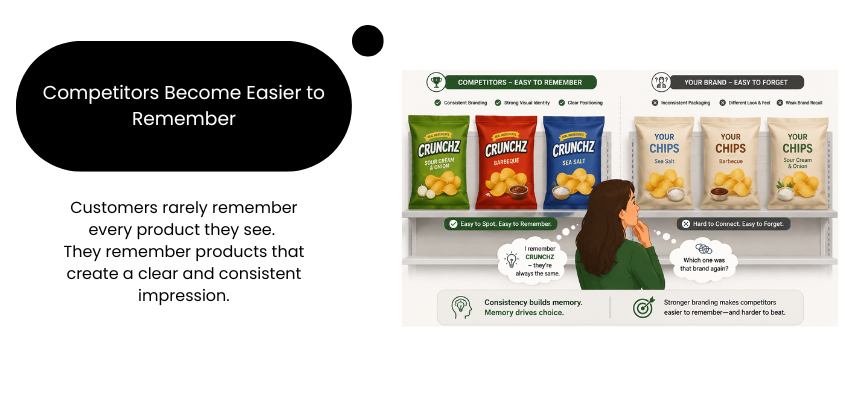
c) Competitors Become Easier to Remember
Customers rarely remember every product they see.
They remember products that create a clear and consistent impression.
If competitors present stronger branding and packaging alignment, they become easier to recognise and recall.
d) Future Redesigns Become More Expensive
Fixing disconnected branding later often requires:
1. Packaging redesigns
2. Website updates
3. Marketing revisions
4. Retail material changes
5. Brand guideline development
It is much easier and more cost-effective to align everything from the beginning.
e) Valuable Brand-Building Opportunities Are Lost
Every product sold is an opportunity to strengthen brand recognition.
When packaging doesn’t reinforce the brand, that opportunity disappears.
The product may sell once, but the company behind it remains forgettable.
So, Which Should Come First?
This question comes up frequently among startups and growing businesses.
The answer is pretty straightforward here.
Branding should always come before packaging design.
Here’s why.
Step 1: Understand the Market
Before designing anything for your brand, take some time to understand:
1. Who your customers are
2. What competitors are doing
3. What gaps exist in the market
4. What customers truly value
Good design always starts with thorough research, not aesthetics.
Step 2: Build the Brand Strategy
This stage clearly defines all the following factors of your brand:
1. Positioning
2. Purpose
3. Values
4. Audience
5. Personality
Without strategy, your design simply becomes random guesswork.
Step 3: Create the Visual Identity
Once the strategy is crystal clear, start with building the visual foundation:
1. Logo
2. Typography
3. Color palette
4. Visual language
5. Brand guidelines
Now your brand has a recognisable identity.
Step 4: Develop the Packaging Strategy
Before creating visuals, decide:
1. What information matters most?
2. What should customers notice first?
3. How should products be organised?
4. What experience should packaging create?
A strong packaging strategy makes design decisions easier and more effective.
Step 5: Design and Launch
Only after the branding foundation is established should packaging design begin.
This ensures the product feels like a natural extension of the brand.
Signs Your Packaging Might Need a Branding Upgrade
Not sure whether your packaging and branding are aligned?
Here are some common warning signs.
i) Customers Remember the Product but Forget the Brand
People recognise the packaging but can’t remember who makes it.
ii) Different Products Look Like They Belong to Different Companies
There is little visual consistency across the product range.
iii) The Packaging Feels Generic
Customers could easily mistake your product for a competitor’s.
iv) Competitors Have Stronger Shelf Presence
Their products stand out more clearly and are easier to recognise.
v) Colours, Fonts, and Design Styles Keep Changing
Frequent visual changes weaken recognition and create confusion.
vi) The Packaging Doesn’t Reflect Your Positioning
Premium brands need premium packaging.
Budget brands need accessible packaging.
The visual message should match the business strategy.
vii) Customers Can’t Identify Related Products
Your product family should feel connected, not disconnected.
viii) The Product Gets Attention but Doesn’t Build Brand Memory
Attractive packaging is useful.
Packaging that reinforces brand identity is far more valuable.
Do Startups Really Need Both Branding and Packaging Design?
In most cases, yes. Absolutely.
Many startups simply focus on packaging because it directly influences sales. Others invest in branding first and treat packaging as an afterthought. Both approaches can limit your growth.
Packaging helps customers notice and choose your product. Branding helps them remember your business and come back for future purchases.
Without strong packaging, even a great brand can struggle to stand out. Without strong branding, even an attractive product can become forgettable.
For startups, branding and packaging work best when they’re developed together. One drives immediate sales, while the other builds long-term recognition, trust, and customer loyalty.
Simply put, packaging helps you win the first sale. Branding helps you win the next ten.
Conclusion:
Branding strategically shapes how people perceive your business over time. Packaging shapes how they perceive your products in the moment. One builds trust before the purchase. The other influences the purchase itself.
When both work together, businesses create stronger recognition, better customer experiences, greater loyalty, and more sustainable growth.
At DesignerPeople, we have already helped thousands of businesses create cohesive branding and packaging designs that not only look great but also drive recognition, trust, and long-term growth. Whether you are launching a new brand or modernising an existing one, connect with our team right away. Let’s create a visual identity together that your customers remember long after the purchase is complete.
Author: Megha Malik

As a passionate entrepreneur and creative brand consultant with experience of 18 years in digital, branding and packaging industry, it is my honest effort to put my experiences and knowledge of industry towards readers. A chartered accountant by degree but a marketing personality in blood has motivated her to take in designing industry as a career. With her fun-loving personality and sharp branding skills, she is a great motivational speaker on her YouTube channel, an active member in various business channels offline as well as online. Do connect me personally via my LinkedIn and I love to share my expertise with you.