
Starting a business in 2026 is easier than ever.
With AI-powered tools, affordable website builders, automation platforms, and digital marketing channels available to almost everyone, launching a startup currently no longer requires a massive budget or a large team. However, while building a business has become easier, building a memorable business has become significantly harder.
In this era, customers are constantly exposed to thousands of marketing messages and notifications daily. Numerous potential startups emerge every week. They offer similar products and services at such competitive rates. And in such saturated markets, customers usually don’t just choose products. They choose solid brands instead.
That’s why branding is no longer something founders can postpone until “later.” It is actually becoming one of the most important business assets a startup can build from day one. A strong brand is the foundation of building solid recognition and trust. It supports customer acquisition and helps businesses grow faster without constantly competing on price.
35% of organisations have witnessed a 10–20% revenue jump specifically from maintaining strict brand consistency.
In 2026, startups that invest in branding aren’t simply creating better logos. They are creating stronger businesses. Let’s learn more about it.
Table of Contents
What Is Startup Branding?
Startup branding is the process of defining how people perceive, remember, and experience a business.
It includes everything from your logo, colours, and website design to your positioning, messaging, customer experience, values, and personality.
Branding specifically helps customers understand who you are, what problem you solve, why you’re different, and why they should trust you.
Think of it this way:
Your product explains what you sell.
Your brand explains why people should choose you instead of others.
Now, the strongest startup brands end up creating these solid emotional connections, memorable experiences, and clear differentiation that your competitors will struggle to copy.
Why Branding Matters for Startups in 2026?
A few years ago, many startups could rely solely on product innovation to gain attention. Today, that’s no longer enough.
Customers have more options, shorter attention spans, and higher expectations than ever before. Branding has become one of the most effective ways to create a competitive advantage.
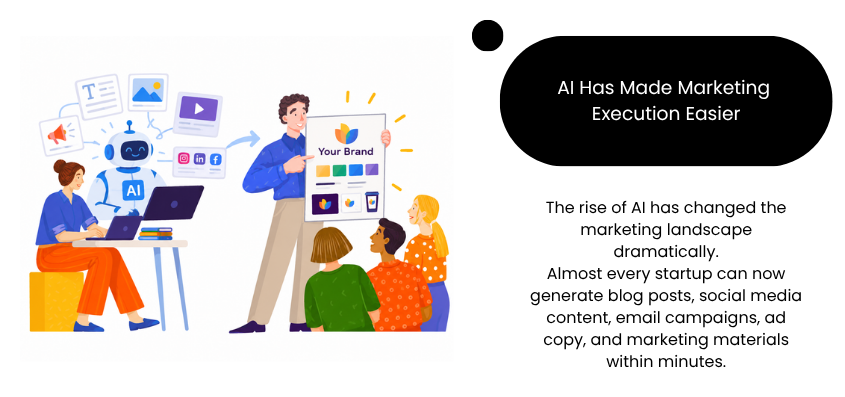
a) AI Has Made Marketing Execution Easier
The rise of AI has changed the marketing landscape dramatically.
Almost every startup can now generate blog posts, social media content, email campaigns, ad copy, and marketing materials within minutes. While this has increased efficiency, it has also created a new challenge.
Everyone can create content.
Not everyone can create recognition.
As AI makes content production easier, brand identity becomes more valuable. Customers are increasingly remembering brands rather than individual pieces of content. A startup with a clear voice, strong personality, and distinctive positioning is far more likely to stand out than one producing generic content at scale.
In simple terms, AI has made marketing execution easier, but it has made differentiation harder.
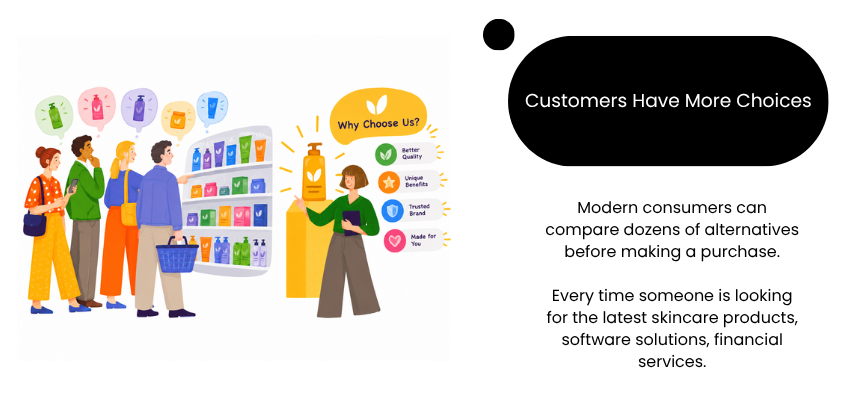
b) Customers Have More Choices
Modern consumers can compare dozens of alternatives before making a purchase.
Every time someone is looking for the latest skincare products, software solutions, financial services, or even simple packaged foods, they can instantly check the reviews, recommendations, pricing comparisons, and customer feedback and make up their minds.
This abundance of choice creates a challenge for startups.
If customers can’t quickly understand why your business is different, they will often move to the next option.
Strong branding reduces this confusion by helping customers immediately understand your value proposition and positioning.
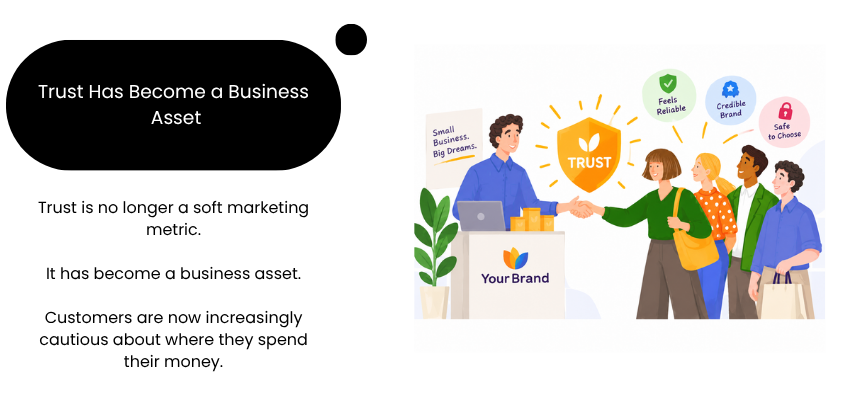
c) Trust Has Become a Business Asset
Trust is no longer a soft marketing metric.
It has become a business asset.
Customers are now increasingly cautious about where they spend their money. They want brands that feel reliable, transparent, and credible. 81% of consumers claim that they only trust the brands they use. Trust has become as important as quality and price in purchasing decisions.
For startups without years of reputation behind them, branding helps establish credibility much faster.
A professional visual identity, consistent communication, and clear positioning can reduce perceived risk and make customers feel more confident about choosing your business.
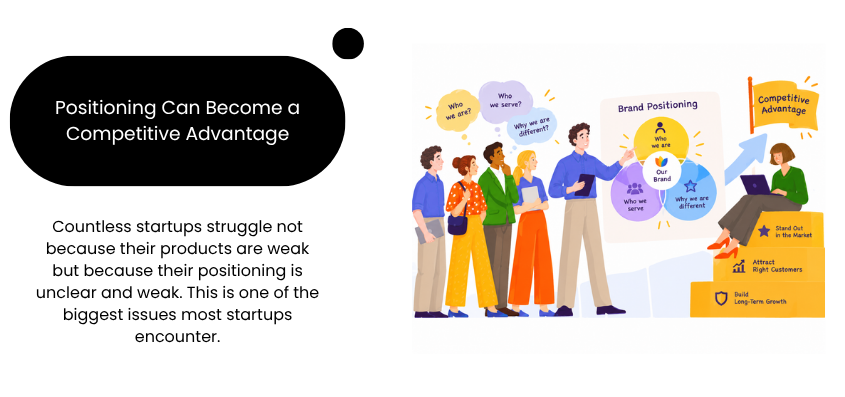
d) Positioning Can Become a Competitive Advantage
Countless startups struggle not because their products are weak but because their positioning is unclear and weak. This is one of the biggest issues most startups encounter.
Customers mostly leave websites wondering:
1. What exactly does this company do?
2. Who is it for?
3. How is it different from others?
Strategic branding is the best way to answer these questions quickly and clearly for consumers.
They clearly differentiate your brand purpose and value, making the entire decision-making process easier. In crowded industries, positioning often matters more than product features.
The clearest brands usually win.
10 Business Benefits of Branding for Startups
Branding influences far more than just brand appearance. It directly impacts your business growth, customer acquisition, retention, long-term business value, and so much more.
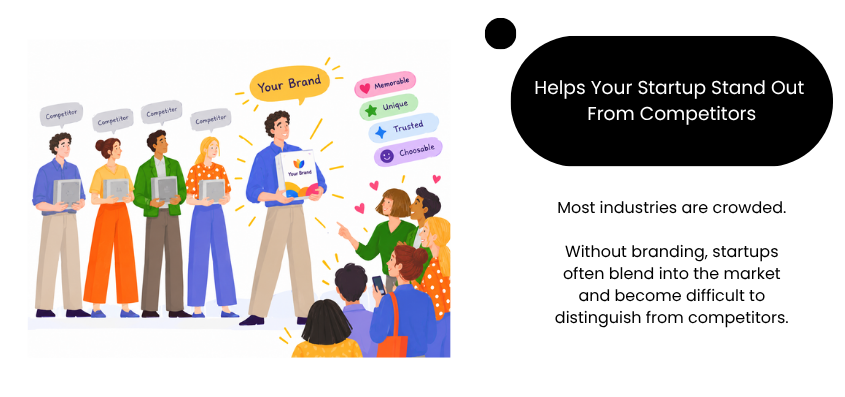
1. Helps Your Startup Stand Out From Competitors
Most industries are crowded.
Without branding, startups often blend into the market and become difficult to distinguish from competitors.
A strong brand gives customers a reason to notice, remember, and consider your business.
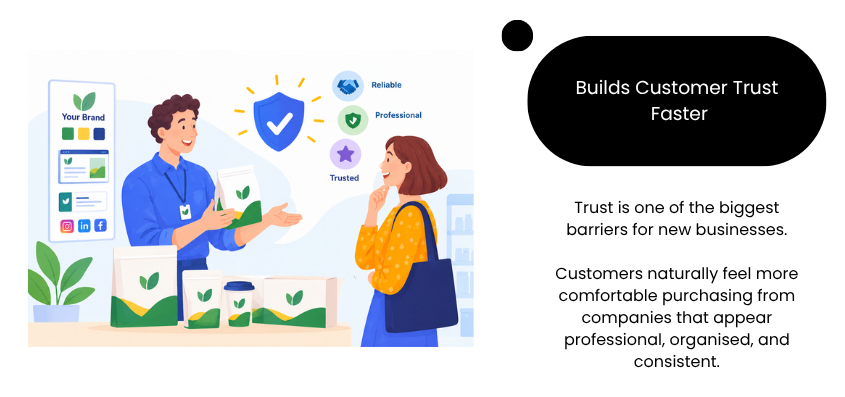
2. Builds Customer Trust Faster
Trust is one of the biggest barriers for new businesses.
Customers naturally feel more comfortable purchasing from companies that appear professional, organised, and consistent.
Strong branding creates familiarity, and familiarity helps build trust.
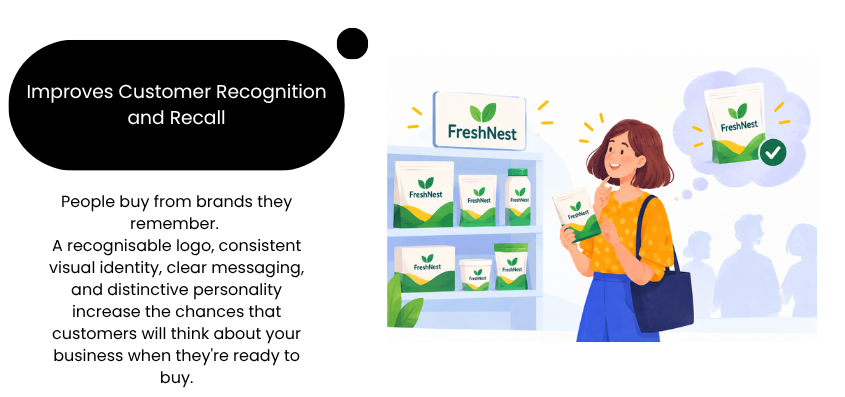
3. Improves Customer Recognition and Recall
People buy from brands they remember.
A recognisable logo, consistent visual identity, clear messaging, and distinctive personality increase the chances that customers will think about your business when they’re ready to buy.
A useful exercise is the “Three-Second Test.”
If someone visits your website for the first time, they should understand what you do, who you help, and why you’re different within a few seconds.
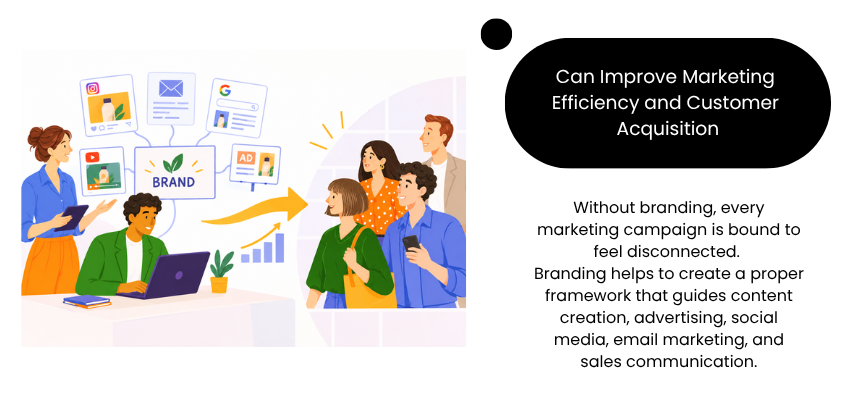
4. Can Improve Marketing Efficiency and Customer Acquisition
Without branding, every marketing campaign is bound to feel disconnected.
Branding helps to create a proper framework that guides content creation, advertising, social media, email marketing, and sales communication.
This improves overall consistency and often reduces wasted marketing effort.
Consistent branding has been associated with stronger business performance and revenue growth across multiple industries.
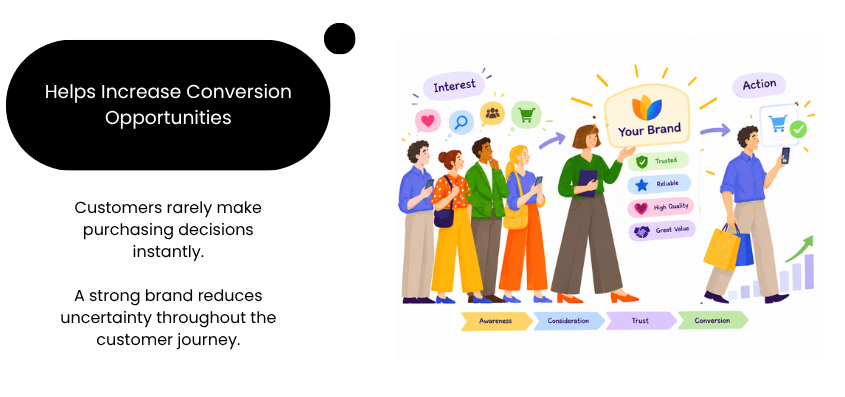
5. Helps Increase Conversion Opportunities
Customers rarely make purchasing decisions instantly.
A strong brand reduces uncertainty throughout the customer journey.
When people understand your value and trust your business, they are more likely to take the next step, whether that’s making a purchase, booking a consultation, or requesting a demo.
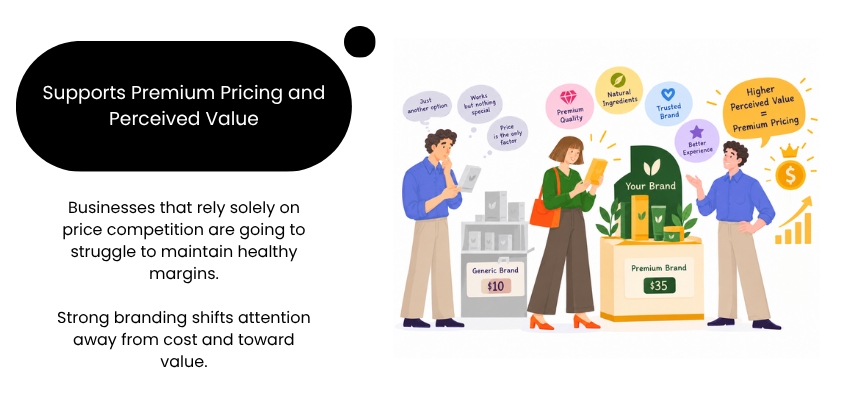
6. Supports Premium Pricing and Perceived Value
Businesses that rely solely on price competition are going to struggle to maintain healthy margins.
Strong branding shifts attention away from cost and toward value.
Customers are often willing to pay more when they perceive a brand as trustworthy, premium, innovative, or reliable.
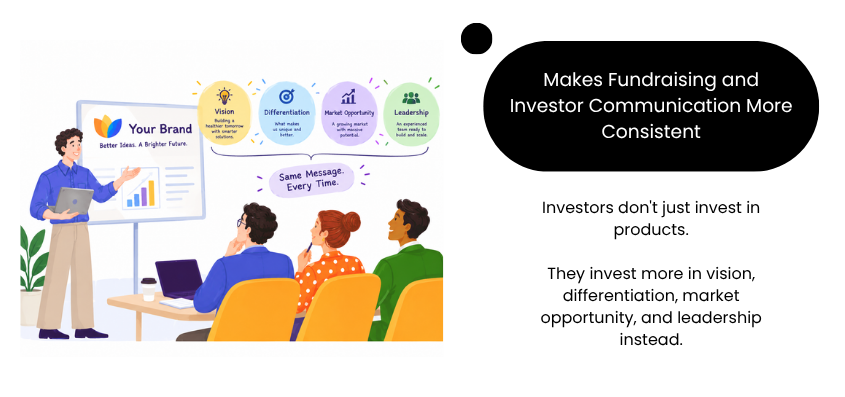
7. Makes Fundraising and Investor Communication More Consistent
Investors don’t just invest in products.
They invest more in vision, differentiation, market opportunity, and leadership instead.
A strong brand actually helps founders communicate these elements more clearly and consistently.
From pitch decks to investor meetings, branding strengthens storytelling.
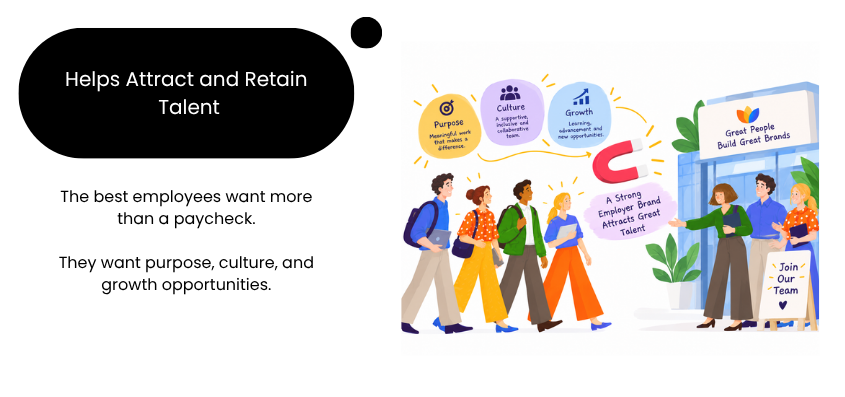
8. Helps Attract and Retain Talent
The best employees want more than a paycheck.
They want purpose, culture, and growth opportunities.
A strong brand helps communicate what your company stands for and why talented professionals should join your team.
Employer branding is becoming increasingly important as competition for skilled talent continues to rise.
9. Creates Consistency Across Marketing Channels
Customers interact with brands across multiple touchpoints.
Your website, social media, packaging design, email campaigns, advertisements, customer service, and sales materials all contribute to brand perception.
Branding ensures these interactions feel connected rather than fragmented.
Consistency builds confidence.
10. Builds Long-Term Brand Equity
Brand equity is surely one of the most valuable assets a business can develop.
Every positive interaction contributes to stronger awareness, customer loyalty, referrals, and long-term market value.
Unlike short-term marketing campaigns, brand equity continues generating returns for years.
The strongest startups don’t simply acquire customers.
They build brands that customers actively seek out.
Steps to Build a Startup Brand Step by Step
Building a strong startup brand is never an overnight process. It requires absolute strategy, clarity, consistency and the right experience from expert brand managers. Here’s a quick step-by-step process for your reference.
Step 1: Define the Target Audience
Start by understanding exactly who you’re trying to serve.
Identify customer demographics, behaviours, pain points, motivations, and goals.
The better you understand your audience and their tastes, the easier it becomes to create a brand that resonates with them.
Step 2: Research Competitors
Study your competitors carefully.
Carefully analyse their current brand positioning, messaging, visual identity, strengths, and weaknesses.
The goal isn’t really to copy them.
The goal is to strategically identify opportunities where your startup can truly stand apart.
Step 3: Define Your Positioning
Positioning is the building block of long-term solid branding.
Ask yourself:
1. What problem do we solve?
2. Who do we solve it for?
3. Why are we different?
4. Why should customers care?
Clear positioning helps customers understand your value immediately.
Step 4: Create the Brand Strategy
This is where many startups make mistakes.
They jump directly into designing logos and websites without defining strategy.
Your brand strategy should establish your mission, vision, values, personality, positioning, and customer promise.
Skipping this integral step will lead to what many branding experts call “branding debt.” In such cases, businesses grow with inconsistent messaging and identity, making future corrections far more expensive and unstable.
Step 5: Develop the Brand Identity
Once the strategy is established, proceed with creating creative and interesting visual elements.
This includes all your brand elements like:
1. Logo design
2. Color palette
3. Typography
4. Photography style
5. Graphic elements
6. Brand guidelines
And more…
These components should always reflect the personality and positioning you’ve defined.
Step 6: Create Messaging and Brand Voice
Your startup should sound as distinctive as it looks.
Ensure you develop and maintain a consistent tone of voice and messaging framework that can be applied across all communication channels.
Whether your brand is professional, friendly, innovative, or playful, consistency matters.
Step 7: Apply the Brand Across Touchpoints
A brand only becomes powerful when people experience it consistently.
Implement your branding across:
1. Website
2. Social media
3. Packaging
4. Advertising
5. Email marketing
6. Presentations
7. Customer support
Every interaction eventually contributes to a better and more profitable perception.
Step 8: Measure and Refine
Branding is not a one-time project.
Monitor customer feedback, brand awareness, engagement metrics, and market perception regularly.
As your startup evolves, your brand should evolve too.
When Should a Startup Invest in Branding?
The short answer?
Earlier than most founders think.
Many startups delay branding until they’ve grown, raised funding, or expanded their team. However, customers begin forming opinions about a business from the very first interaction.
A startup should start investing in branding once it has validated its business idea and gained a basic understanding of its target audience.
Branding doesn’t require a massive budget initially.
What it requires is clarity.
The earlier a startup establishes its identity and positioning, the easier future growth becomes.
How Branding Supports Different Startup Growth Stages
Branding creates different advantages at different stages of a startup’s journey.
During the early stage, branding helps establish credibility and generate trust. It helps potential customers understand why the startup deserves attention.
During the growth stage, branding improves customer acquisition efficiency, increases recognition, and supports marketing efforts across multiple channels.
As the business expands, branding is the key to creating and maintaining the right consistency across larger teams, multiple products, and new markets. It helps maintain a unified customer experience.
At maturity, branding becomes a competitive moat. Strong brand equity creates loyalty, referrals, premium pricing opportunities, and market influence that competitors find difficult to replicate.
The most successful startups don’t view branding as a design project.
They view it as a long-term business asset.
Final Thoughts:
In 2026, startups face more competition, more noise, and more customer scepticism than ever before.
The businesses that succeed won’t necessarily have the biggest budgets or the most advanced technology.
They will have the clearest identities.
The right kind of brand truly helps customers understand you, trust you, remember you, and ultimately choose you over countless alternatives.
It strengthens marketing, improves conversions, supports premium pricing, attracts talent, and even creates long-term business value.
At DesignerPeople, we help startups build memorable brands that combine strategy, creativity, and business thinking. Starting from creative brand strategy and visual identity design to packaging, positioning, and market differentiation, our team helps startups create brands that don’t just look good. They drive growth for years!
Because in a world full of choices, the brands people remember are usually the brands people choose.

Being a strategist’s head and a long term visionary personality aims to achieve excellence in branding, packaging and digital marketing field. My 22 years of design experience and masters degree is my strength which keeps me motivated and keep me going positively. I have participated in extensive branding design conquests in India, USA, Australia and New Zealand with winning zeal. My objective is to encourage start-ups and hence involves actively in the articles which will act as a productive intake of knowledge for them. Do connect me personally via my LinkedIn and I love to share my expertise with you.