
For the longest time, manufacturing companies believed one thing:
“If our product is good, it will sell.”
And yes, product quality still matters. A lot. But here’s the reality today…
Buyers don’t just choose products anymore. They choose brands they trust.
Whether it’s industrial pipes, machinery, chemicals, or components, decision-makers are doing their research. They check websites, compare companies, look for credibility, and try to understand who they’re dealing with.
That’s where branding comes in.
Manufacturing branding isn’t only about making things “look fancy.” It’s about building trust, clarity, and confidence, especially in high-value B2B deals where the stakes are high.
Because when someone is placing a large order or signing a long-term contract, they don’t just ask, “Is this product good?”
They ask, “Can I trust this company?” That’s the real deal in this industry.
And your branding answers that question before you even speak. Let’s decode more about manufacturing branding together today.
Table of Contents
So What Does “Manufacturing Branding” Actually Mean?
In simplest terms, manufacturing branding is now all about how your brand actually presents itself to consumers. Not just visually, but strategically. Super important!
It covers everything, starting from:
1. How your company looks (logo, website, brochures)
2. How your brand communicates everything (messaging, tone, clarity)
3. What your brand actually stands for (quality, innovation, reliability)
And more…
It is the overall perception people have about your business.
In B2B manufacturing, branding isn’t about emotional storytelling like in FMCG. It is all about credibility, consistency, and confidence.
A strong manufacturing brand actually makes people feel like:
“Okay, this company knows what they are doing.”
And that feeling? It directly impacts buying decisions.
Why Branding Is Becoming the Real Growth Engine for Manufacturing Companies?
A few years ago, branding wasn’t a priority for most manufacturers.
Today? It’s becoming a competitive advantage. Here’s why:
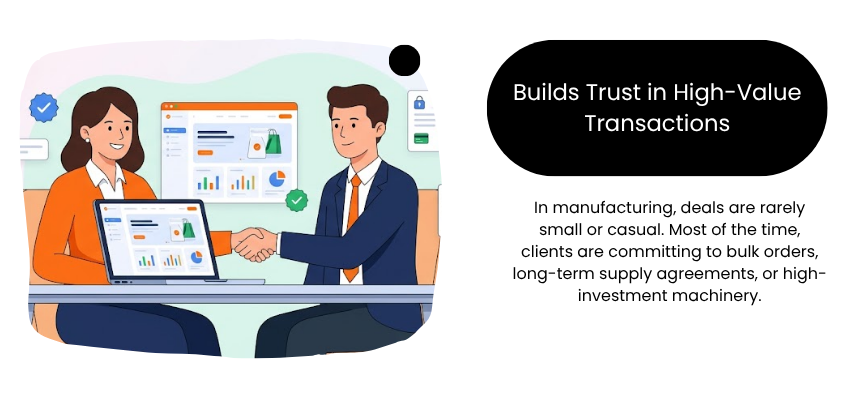
a) Builds Trust in High-Value Transactions
In manufacturing, deals are rarely small or casual. Most of the time, clients are committing to bulk orders, long-term supply agreements, or high-investment machinery. That means they are not just buying a product. They are choosing a partner they can rely on.
This is where branding quietly starts doing its job.
When your company has a well-structured website, clear communication, and consistent visuals, it creates a sense of professionalism even before the first meeting. It reassures the buyer that you are organised, experienced, and serious about your business.
Think about it. If a potential client is comparing two manufacturers with similar products, they will obviously feel more confident choosing the one that looks more reliable, right? That initial perception often becomes the ultimate deciding factor!
In high-value transactions, trust isn’t optional anymore. And strong branding helps build that trust faster.
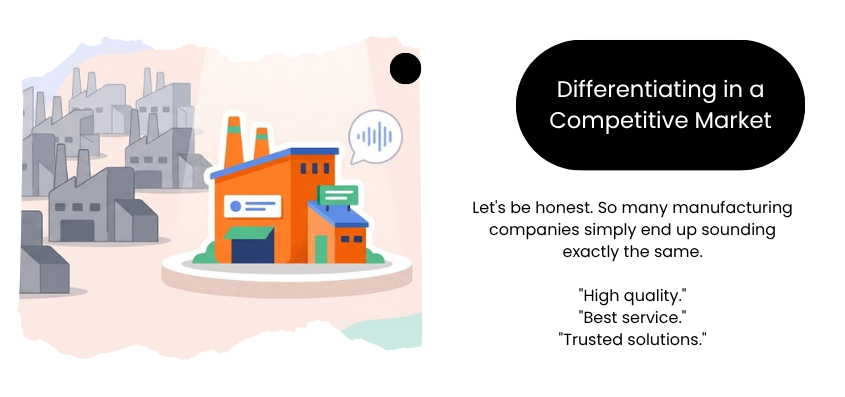
b) Differentiating in a Competitive Market
Let’s be honest. So many manufacturing companies simply end up sounding exactly the same.
“High quality.”
“Best service.”
“Trusted solutions.”
When everyone says the same thing, buyers always struggle to see the difference.
Branding ultimately helps you break out of that sameness.
It gives you a clear voice, a distinct brand identity, and a way to communicate what makes you unique. Whether that is faster delivery, better technology, or stronger after-sales support, it covers everything.
When your positioning is clear, you are no longer just another option in a long list. You become a brand that people remember and consider seriously.
And in competitive markets, even a small difference in perception can lead to big business opportunities.
c) Supports Premium Pricing
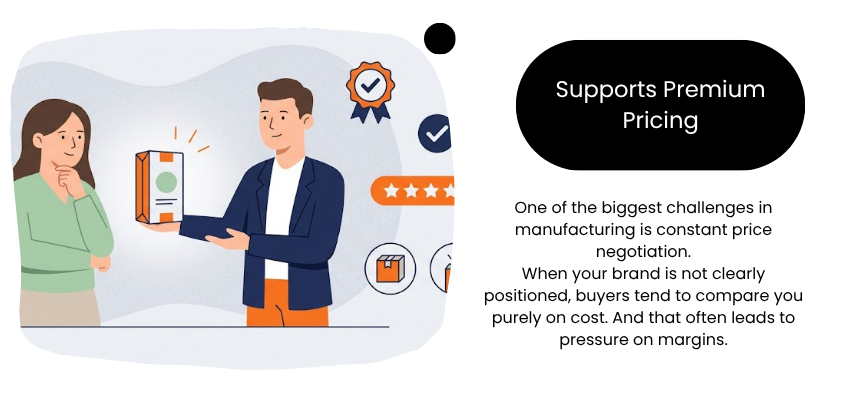
One of the biggest challenges in manufacturing is constant price negotiation.
When your brand is not clearly positioned, buyers tend to compare you purely on cost. And that often leads to pressure on margins.
But when your branding communicates value, through professionalism, clarity, and credibility, the conversation shifts right away.
Instead of asking, “Why is this expensive?”
Clients start asking, “What makes this better?”
Now, that’s a huge difference.
Strong branding always allows you to justify your pricing because it highlights your brand’s strengths, quality standards, and reliability. It positions your brand as a partner worth investing in, not just any random vendor to negotiate with.
d) Repeat Business and Long-Term Contracts
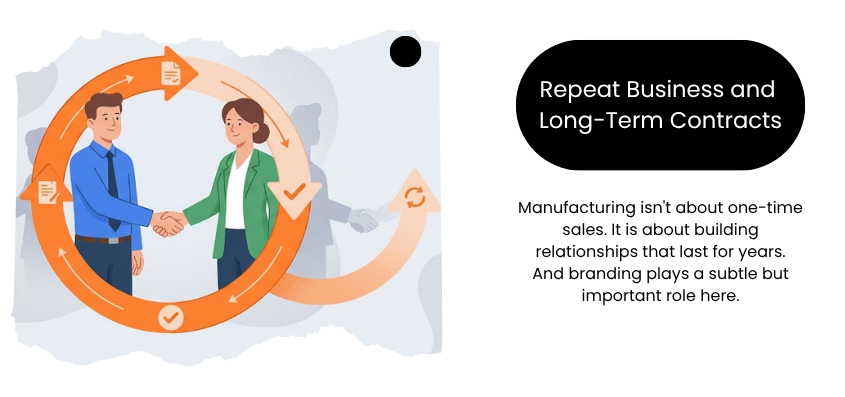
Manufacturing isn’t about one-time sales. It is about building relationships that last for years.
And branding plays a subtle but important role here.
When your communication is consistent, your identity is recognisable, and your experience is smooth, clients feel comfortable working with you again. There’s a sense of familiarity and reliability that builds over time.
That’s what leads to repeat orders, ongoing contracts, and long-term partnerships.
In many cases, clients don’t even explore alternatives once they trust a brand. They simply continue with what works.
And that’s where branding becomes a long-term growth driver.
Practical Manufacturing Branding Strategies That Actually Bring High-Value Clients
Let’s skip all the generic advice and talk straight about what actually works in real B2B scenarios.
Step 1: Market Research & Competitor Analysis
Before building your brand, it is super important to understand the space you’re operating in.
Look at your competitors. Carefully analyse how they present themselves, what they highlight, and how they communicate. This helps you identify gaps and opportunities.
At the same time, understand your target clients. What industries do they belong to? What challenges are they facing? What are they expecting from a supplier?
When you have this clarity, your branding becomes more focused and relevant instead of generic!
Step 2: Define Brand Positioning (USP)
Every manufacturing company needs a clear reason why clients should choose them.
It could be faster delivery timelines, better customisation, advanced technology, or strong after-sales service.
But whatever it is, it should be clearly defined and consistently communicated.
If your USP isn’t clear, clients will default to comparing prices, and that’s not where you want to compete.
Step 3: Develop A Solid Brand Identity
Your brand identity is everything about how your company looks and feels across all touchpoints.
This also includes your logo, colour palette, typography, and overall design style. Be very mindful here.
In manufacturing, the goal isn’t to be flashy. It is to look structured, professional, and dependable.
A clean and consistent identity gives the impression that your business is well-organised, which builds confidence instantly.
Step 4: Build a Professional Website
Your website is often the first place potential clients interact with your brand.
And in many cases, it decides whether they take you seriously or move on.
Your website should clearly explain:
1. What your brand does
2. What products or services do you offer
3. Which industries does your brand serve
4. Why clients should trust your brand
It should always be easy to navigate, visually clean, and informative without being overwhelming.
Think of it as your digital sales team working 24/7.
Step 5: Content & SEO Strategy
Today, most B2B buyers start their research online. That’s the real deal.
If your company isn’t visible during that process, you’re missing opportunities.
Creating useful content. Blogs, product guides, and case studies. These actually help you attract and educate potential clients.
Over time, this positions your brand as knowledgeable and reliable, which makes a big difference during decision-making.
Step 6: Implement Marketing Channels
You don’t really need to be everywhere, but you do need to be present in the right places.
For manufacturing, platforms like LinkedIn, industry directories, trade shows, and email marketing often work well.
The idea is to always stay visible where your target clients are already looking.
Step 7: Monitor Analytics and KPIs to Optimise
Branding efforts should never run blindly.
Always track your website traffic, lead generation, and engagement levels to understand what’s working. This is very crucial.
These insights eventually help you make better decisions and improve your strategy over time.
Step 8: Keep Messaging Simple and Benefit-Driven
Avoid overloading your audience with technical jargon.
Instead, focus on what your product or service does for the client.
How does it solve their problem? How does it even improve efficiency or reduce costs? What does your brand offer better than others?
Always prioritise clear, benefit-driven messaging. Way easier to understand and far more effective!
Step 9: Invest in Professional Design and Packaging
Design influences perception instantly.
Whether it is your brochures, product catalogues, or packaging design, everything should look polished and consistent.
Good design doesn’t just make things look better. It ultimately makes your brand feel more credible.
Step 10: Showcase Certifications and Quality Standards
Certifications are a strong trust factor in manufacturing.
They show that your company meets certain quality and compliance standards.
Make sure these are clearly visible across your branding on your website, brochures, and presentations.
Step 11: Use Client Testimonials and Case Studies
Nothing really builds confidence like real proof.
Testimonials and case studies show that you have successfully worked with other clients and delivered results.
They reduce uncertainty and make it easier for new clients to trust you.
Step 12: Maintain Consistency Across All Platforms
Your branding should feel the same everywhere. Online and offline.
When your website, emails, social media, and marketing materials all follow a consistent style, it creates a strong and recognisable brand image.
Consistency always builds familiarity, and familiarity builds trust. Easy!
Step 13: Focus on Long-Term Brand Building, Not Quick Wins
Branding is not something that delivers instant results. Something to really consider here.
This is a long-term effort that gradually builds a reputation over time.
Companies that actually invest in consistent branding eventually attract better clients, close bigger deals, and grow more sustainably.
Real Manufacturing Brands That Got It Right
Let’s look at some companies that have used branding effectively.
Case Study 1: Astral Limited
Astral has truly managed to stand out in a highly competitive piping industry by building a strong and consistent brand image. Instead of focusing only on product features, they invested in clear communication, modern design, and a strong marketing presence.
Over time, this helped them move beyond being just another manufacturer to becoming a widely recognised and trusted name across India!

Case Study 2: 3M
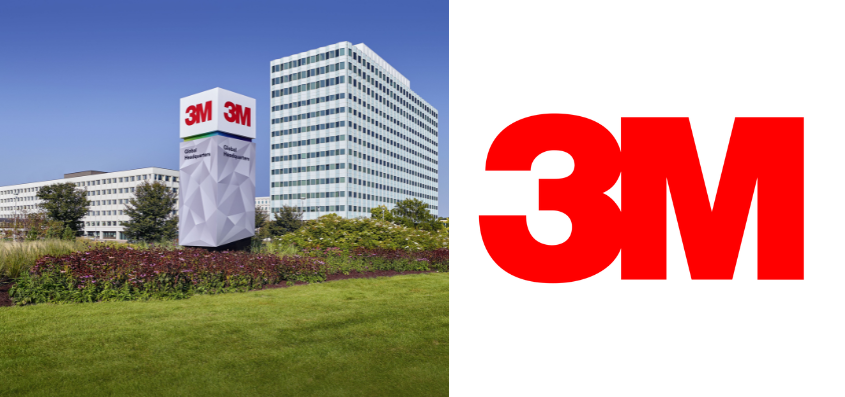
3M is such an amazing example of how branding can support innovation.
Their brand consistently highlights research, technology, and problem-solving across industries. Whether it’s your healthcare, construction, or consumer products, their messaging forever remains clear and focused on innovation.
This consistency has actually helped them build global trust and credibility.
Case Study 3: Dyson
Dyson took a completely different approach by turning engineering into a premium brand experience.
They focus heavily on design, performance, and innovation and communicate these aspects very clearly through their branding.
As a result, they are now able to position themselves as a high-end brand, even in categories that are otherwise very functional!

Final Thoughts
The manufacturing industry is changing for sure.
It is no longer enough to just produce quality products. You also need to present your business in a way that builds trust, stands out, and communicates value clearly.
That’s what branding does.
It helps you attract better clients, charge better prices, and build long-term relationships.
If you are really serious about scaling your manufacturing business, branding isn’t optional anymore. It is truly essential.
At DesignerPeople, we help manufacturing companies build brands that don’t just look professional but actually perform in real B2B markets. From identity to digital presence, our branding experts create the best manufacturing branding strategies that help you stand out and grow.
Because in today’s market, the companies that win aren’t just the ones who manufacture well. They are the ones who brand smartly!
Author: Megha Malik

As a passionate entrepreneur and creative brand consultant with experience of 18 years in digital, branding and packaging industry, it is my honest effort to put my experiences and knowledge of industry towards readers. A chartered accountant by degree but a marketing personality in blood has motivated her to take in designing industry as a career. With her fun-loving personality and sharp branding skills, she is a great motivational speaker on her YouTube channel, an active member in various business channels offline as well as online. Do connect me personally via my LinkedIn and I love to share my expertise with you.